

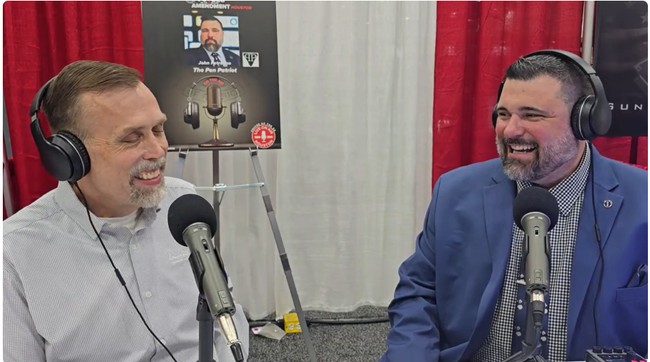
Eric Wesson’s reflections on the family name cut deeper than nostalgia—they illuminate how one lineage helped shape the very identity of American handgun innovation. From the original Smith & Wesson partnership through Dan Wesson’s bold departure to found his own revolver company, the Wesson story is a case study in what happens when engineering talent refuses to be constrained by corporate inertia. Eric’s anecdotes about “Dan, D.B., and more” reveal a continuum of craftsmanship that treated the revolver not as a finished product but as an evolving platform, an attitude that still resonates with today’s 2A advocates who prize modularity and user-driven improvement over one-size-fits-all designs.
What stands out is how the Wesson approach prefigured the modern custom and aftermarket culture that keeps the right to keep and bear arms vibrant. By insisting on interchangeable barrels, cylinders, and grips long before “modular” became a buzzword, Dan Wesson Arms quietly advanced the principle that lawful gun owners should be able to tailor their tools to specific needs—whether that means switching from .357 Magnum to .22 LR for training or optimizing ergonomics for competition. Eric’s insider perspective underscores that these choices were never merely commercial; they embodied a belief that responsible citizens are competent enough to configure their own firearms, a direct rebuke to the regulatory mindset that treats gun owners as passive end-users rather than active stewards of their rights.
For the 2A community, the Wesson legacy is therefore more than heritage—it is a living argument that innovation flourishes best when government stays out of the design room. Each time a shooter today drops a new barrel on a Dan Wesson revolver or debates the merits of a classic Model 15 versus a contemporary 1911, they are participating in the same continuum Eric describes: individuals exercising both mechanical creativity and constitutional liberty. In an era of proposed restrictions on configurations and features, remembering how one family kept pushing the envelope reminds us that the future of American firearms will be written by those who continue to tinker, customize, and defend the right to do so.


