

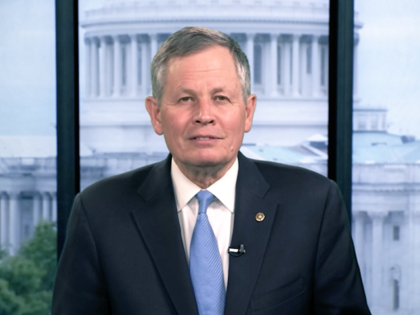
Sen. Steve Daines’ reflections on America’s 250th birthday strike a chord that resonates far beyond patriotic ceremony, especially for those who see the Second Amendment as the living embodiment of the same spirit that settled Montana’s high country. When Daines speaks of family roots forged in frontier self-reliance, he is describing the precise conditions that made an armed citizenry not merely a right but a practical necessity—ranchers, miners, and homesteaders who carried rifles as routinely as they carried tools, because no sheriff’s office could reach them in time. That lived experience is why Montana’s political class still treats the right to keep and bear arms as non-negotiable rather than a talking point; it is the difference between abstract theory and the muscle memory of a people who still hunt, ranch, and defend property on land where cell service is a rumor.
The senator’s nod to “every corner of this country” telling a story of strength also quietly underscores a constitutional truth the 2A community has long argued: the right to arms is not a regional quirk or a hobbyist preference but a nationwide insurance policy against centralized power. As the nation approaches its semiquincentennial, renewed debates over magazine capacity, pistol braces, and “ghost guns” are less about public safety than about whether the same federal government that once promised to respect frontier autonomy now believes it alone should decide how citizens may defend themselves. Daines’ framing reminds readers that the promise of freedom is measured not by commemorative speeches but by whether ordinary Americans in every state can still exercise the same practical independence their ancestors took for granted.
For the firearms community, the takeaway is straightforward: the 250th anniversary is not merely a historical milestone but a stress test. If the next quarter-millennium is to echo the resilience Daines celebrates, the institutional memory of armed self-reliance must be actively transmitted to new generations of owners, voters, and legislators—especially in states where that memory is already fading under layers of coastal policy assumptions. Montana’s senior senator has given the 2A world a useful reminder that the American story is still being written in gun cabinets, reloading rooms, and state capitols, one quiet act of responsible ownership at a time.


