

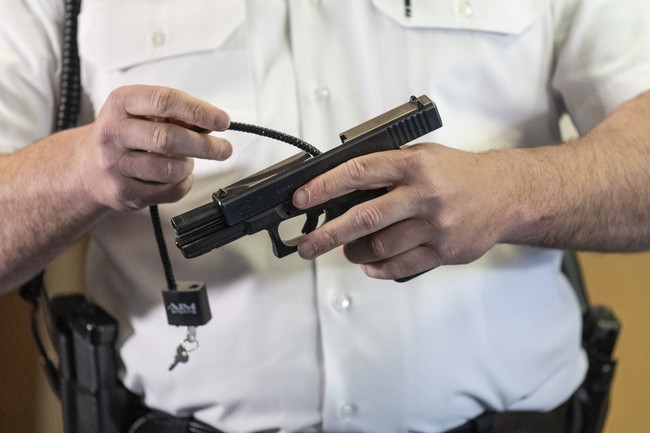
Florida’s red-flag statute, sold to the public as a narrow, judicially supervised tool for disarming the “truly dangerous,” has instead become a quiet but steady engine for preemptive gun confiscation that bypasses the usual due-process safeguards gun owners have long relied upon. The advisor’s glowing assessment conveniently ignores how these orders are often granted on the word of family members, roommates, or even disgruntled acquaintances, frequently without the respondent present to contest the allegations. Once the firearms are seized, recovering them can take months of legal wrangling and thousands in attorney fees, turning a temporary “safety” measure into a de-facto, long-term disarmament for law-abiding citizens who have never been charged with a crime.
For the 2A community the lesson is straightforward: any mechanism that lets the state seize constitutionally protected arms on a civil finding rather than a criminal conviction is an invitation to mission creep. Florida’s law was pitched as an emergency brake for active threats; in practice it functions more like a slow-moving parking brake that can be applied whenever someone decides your guns make them uncomfortable. Similar statutes have already spread to more than twenty states, each new version expanding the list of eligible petitioners and lowering the evidentiary bar. The result is a growing patchwork of extra-judicial disarmament that never requires a jury, never triggers the full protections of the Second Amendment, and never seems to shrink once enacted.
The deeper implication is that red-flag laws normalize the idea that gun ownership itself is a conditional privilege rather than a right, subject to bureaucratic or judicial veto on the flimsiest of showings. Pro-2A advocates who accept these statutes as “reasonable” are effectively conceding that the state may suspend constitutional rights first and sort out the facts later—an approach historically applied to speech, religion, and assembly only in the most extreme wartime circumstances. If the Florida model is indeed the success its backers claim, the 2A community should treat that success as a warning label, not a blueprint.


