

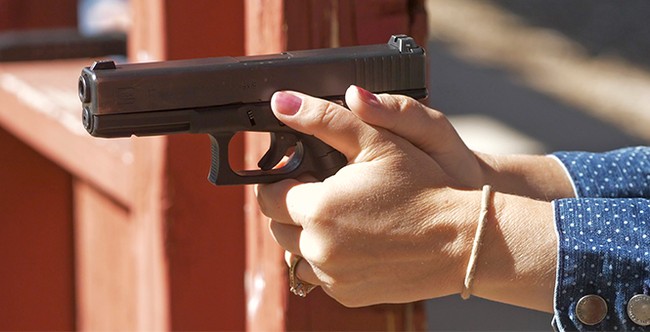
The backlash against the so-called “active-shooter response trainer” who mocked the idea of armed teachers reveals more than a single Twitter spat; it exposes the widening gap between credentialed “experts” and the people who actually live with the consequences of gun-free zones. While the trainer leaned on the familiar talking point that “more guns equal more danger,” the replies came from parents, school-resource officers, and even former students who have watched drills turn into real-world tragedies because the only armed adult on campus was minutes away. Their message was simple: when seconds count, the closest firearm is often the one carried by the teacher who already knows every hallway and every face in the room.
What makes the ratio so telling is how thoroughly the trainer’s argument collapsed under real-world data. Multiple studies—from the CDC’s own 2003 report to the 2019 analysis by the Crime Prevention Research Center—show that armed citizens stop active shooters far more often than media coverage suggests, and that schools with armed staff experience measurably shorter attack durations. The trainer’s blanket assertion that “teachers aren’t trained for that” ignores the growing number of districts that now require the same qualification courses used by off-duty police, as well as states like Texas and Ohio that have logged thousands of incident-free school-carry hours. In short, the rebuttals weren’t theoretical; they were drawn from policy experiments already running in red-state hallways.
For the 2A community, the episode is a reminder that cultural authority is shifting away from legacy “trainers” and toward parents who treat school safety as a local, not federal, responsibility. Every time a credentialed voice dismisses armed staff without engaging the data, it hands the grassroots another case study in why decentralization beats one-size-fits-all security theater. The ratio wasn’t just online snark—it was a crowd-sourced veto of the notion that only government employees should be trusted with the tools of self-defense inside the very buildings where the next generation spends its formative years.


