

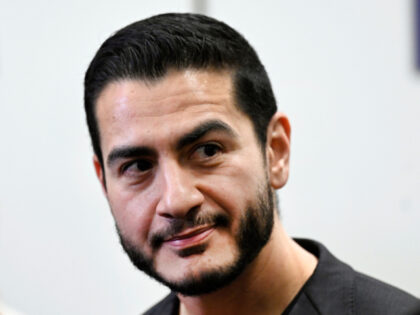
Abdul El-Sayed’s 2020 record reveals a textbook case of rules-for-thee-but-not-for-me governance that should alarm every gun owner who watched their ranges, shops, and training classes shuttered under the same “public-health emergency” he helped justify. While the former Detroit health director publicly championed Michigan’s sweeping lockdowns—complete with arbitrary capacity limits and outright bans on “non-essential” businesses—he simultaneously marched shoulder-to-shoulder with thousands at BLM rallies, insisting those events posed no comparable risk. The contradiction wasn’t merely rhetorical; it exposed how easily an emergency-power apparatus can be toggled on or off depending on political alignment, a precedent that directly threatens the right to keep and bear arms whenever officials decide the Second Amendment is suddenly “non-essential.”
For the 2A community, the lesson is straightforward: any framework that lets one class of assembly (protests) evade scrutiny while another (firearm instruction, competition, even private sales) is deemed too dangerous sets a template that can be redeployed the next time a crisis—real or manufactured—appears. El-Sayed’s Senate bid, bankrolled by the same institutional donors who cheered last year’s restrictions, signals that this selective logic is being auditioned for higher office, not repudiated. Gun owners who shrugged off the 2020 carve-outs as one-off pandemic policy are ignoring an emerging pattern in which public-health or “equity” rhetoric is used to normalize viewpoint-based restrictions on constitutionally protected conduct.
The broader implication is chillingly simple: if a politician can wave off thousands of unmasked, tightly packed demonstrators while simultaneously shuttering gun stores and ranges, then no enumerated right is safe once officials label its exercise a public-health or social-justice problem. The 2A community’s only durable safeguard is to reject emergency carve-outs altogether and insist that constitutional rights remain fully operational even—especially—when political actors claim extraordinary powers.


