

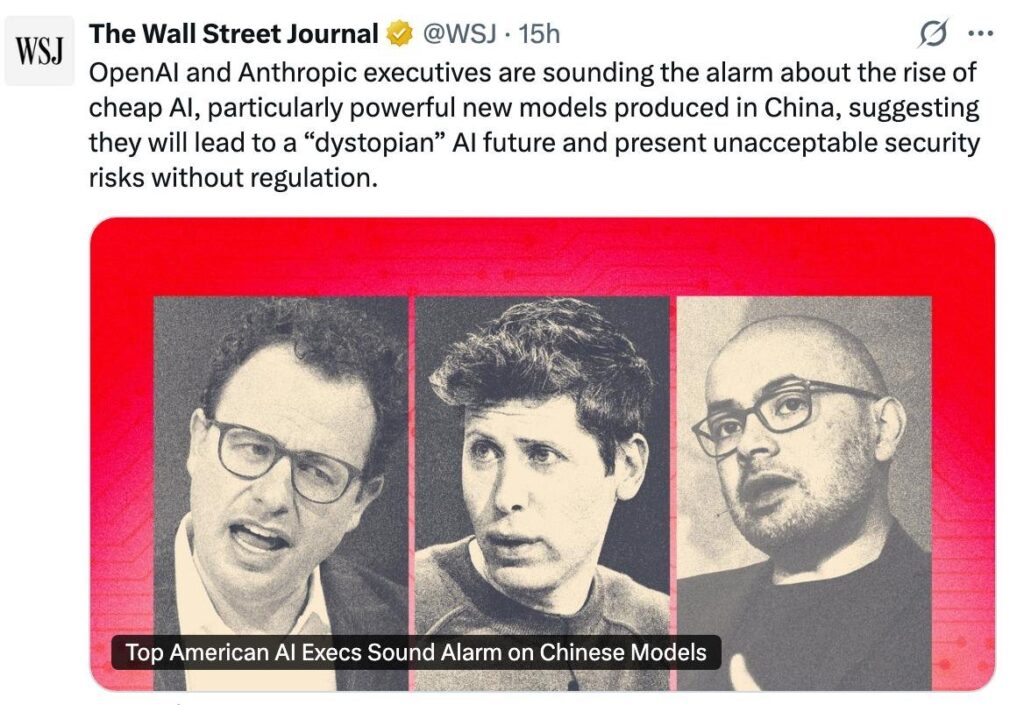
The gun-control playbook is being dusted off and rebranded for the age of artificial intelligence, and the 2A community should recognize the pattern before the first “reasonable restriction” is signed into law. Just as early licensing schemes for handguns were sold as public-safety measures and later metastasized into discretionary “may-issue” permitting, today’s calls for AI “alignment audits” and compute caps are pitched as narrow, technocratic guardrails. Yet the same logic that once justified registering every pistol now underpins proposals to license every large-model training run—an infrastructure that could be quietly repurposed to throttle open-source development, favor incumbent labs, and ultimately decide who is “fit” to wield advanced tools. History shows that once a government builds the registry, the permit, and the enforcement agency, the definition of “dangerous” expands with every election cycle.
What makes the analogy especially potent is the shared rhetoric of collective guilt: a handful of criminals misusing firearms is used to stigmatize all owners, just as a few sensational AI incidents are leveraged to portray any unconstrained model as an existential risk. Both narratives shift the Overton window from “How do we punish misuse?” to “How do we pre-empt capability itself?”—a move that converts a civil right into a revocable privilege. The 2A community learned the hard way that “common-sense” incrementalism rarely stops at the first compromise; similarly, an AI-licensing regime seeded with today’s frontier-company endorsements could be expanded tomorrow to hobbyist clusters, independent researchers, and even encrypted local inference. The result is a chilling effect on innovation that mirrors the way shall-issue carry victories were clawed back in states that later embraced “red-flag” seizures and magazine bans.
For gun owners, the lesson is strategic as well as philosophical: the same constitutional skepticism that defeated the Hughes Amendment’s machine-gun freeze or California’s microstamping mandate should be trained on any regulatory architecture that requires prior approval to experiment, to publish weights, or to run inference above an arbitrary FLOP threshold. If the Second Amendment exists to keep the ultimate check on power in the hands of a free people, then an unregulated space for open-source AI may prove equally indispensable. The cautionary tale is not that guns and AI are identical technologies, but that the arguments used to disarm citizens are modular—and they fit any domain where knowledge itself is treated as the threat.


