

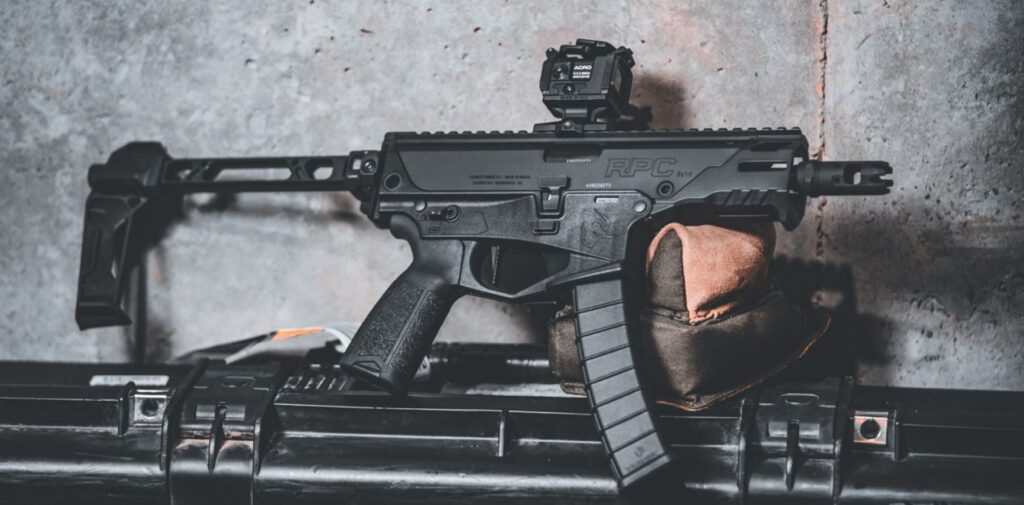
The Taurus RPC’s roller-delayed blowback system isn’t just a clever engineering flex—it’s a direct challenge to the notion that premium features must carry premium price tags. By borrowing the delayed-blowback principle long associated with high-end European designs, Taurus has placed a mechanism once reserved for rifles costing twice as much into a 9mm PCC that lands comfortably under most shooters’ budgets. That matters because roller-delayed actions tame recoil impulse and improve feeding reliability with a wide range of defensive and practice ammo, giving budget-conscious buyers performance that used to require stepping up several price brackets. For the 2A community, this is tangible proof that market competition and manufacturing scale can democratize advanced operating systems rather than keep them locked behind boutique pricing.
Accuracy that tracks with far costlier carbines also shifts the conversation about what constitutes a serious home-defense or truck gun. When a sub-$1,000 platform groups inside two inches at 50 yards with quality hollow points, the old hierarchy that equated higher spend with higher capability starts to erode. That erosion is healthy: it pressures legacy manufacturers to justify their margins while simultaneously expanding the pool of citizens who can afford a reliable, soft-shooting PCC for sport, training, or lawful self-defense. In an era of ongoing regulatory pressure and supply-chain uncertainty, accessible excellence like the RPC strengthens the practical case for an armed populace by lowering the barrier to competent equipment.
Ultimately, the RPC’s arrival signals that the center of gravity in the PCC market is moving. No longer is roller-delayed operation an exotic curiosity; it’s becoming a competitive baseline that more companies will have to meet or beat. For enthusiasts, that means more choices, better performance per dollar, and continued momentum toward normalizing modern, reliable firearms as ordinary tools of responsible citizenship rather than luxury items.


