

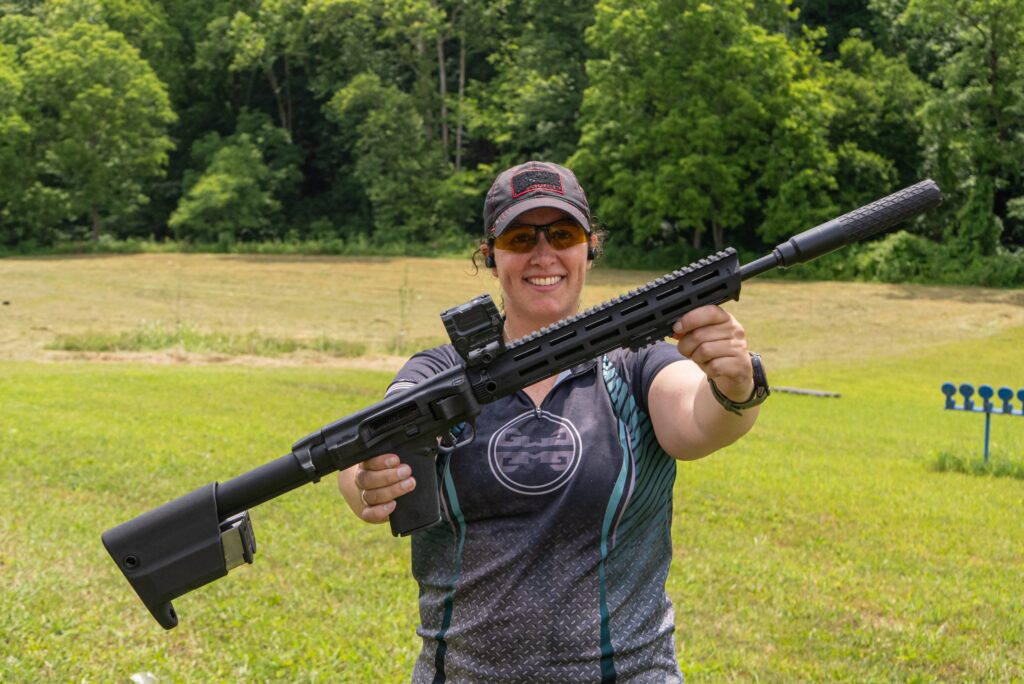
The M&P FPC in 5.7x28mm paired with the Gemtech Nebula isn’t just another range toy—it’s a deliberate middle finger to the notion that modern carbines must be boring, heavy, or politically correct. Smith & Wesson took the folding, optics-ready FPC platform and chambered it in a round originally designed to defeat body armor, then let Gemtech tame the report with a suppressor that keeps the package compact enough to stay legal in restrictive states. The result is a 5.7 carbine that folds smaller than most 9mm pistols yet still delivers the flat-shooting, high-velocity performance that makes the cartridge so appealing for both plinking and defensive use. For the 2A community this matters because it proves manufacturers are still willing to innovate around arbitrary restrictions instead of surrendering to them; every time a company ships a folding, suppressor-ready rifle in a “non-assault” caliber, it expands the Overton window of what civilians can legally own and enjoy.
Beyond the hardware, the review underscores how suppressors have shifted from niche accessories to mainstream quality-of-life upgrades. The Nebula’s ability to keep the M&P FPC hearing-safe without adding excessive length or weight removes one of the last practical objections some shooters still raise against 5.7 platforms. That matters in an era when anti-gun legislators keep trying to tax or ban suppressors under the guise of “public safety.” When everyday gun writers can casually review a suppressed 5.7 carbine as “peak fun,” it normalizes the idea that sound moderation is responsible gun ownership, not some exotic exception. The 2A movement benefits every time a new platform demonstrates that lawful citizens can field high-performance, low-signature firearms without needing special government permission slips.
Finally, the combination signals where the market is heading: lighter, faster, and more modular rifles that fit modern defensive and recreational needs while staying just inside the lines drawn by current law. As states continue experimenting with feature bans and magazine restrictions, guns like the FPC 5.7 give owners a legal workaround that still delivers serious capability. That kind of engineering creativity keeps the right to keep and bear arms relevant instead of frozen in 1791 technology. The more these “unique” designs succeed in the marketplace, the harder it becomes for future restrictions to claim they’re targeting only “military-style” weapons—because the line between fun carbine and defensive tool keeps blurring in the civilian’s favor.


