

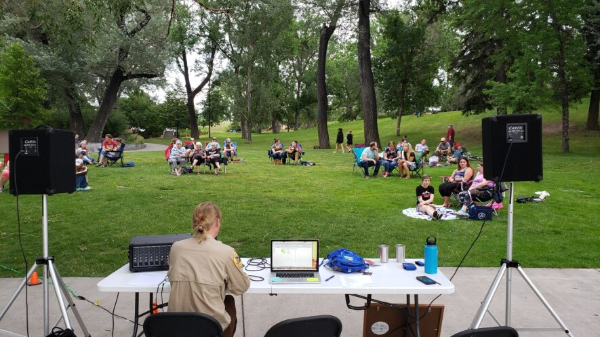
Giant Springs State Park’s new Tuesday-night trivia series is more than a summer diversion; it’s a low-key reminder that public lands remain one of the last truly shared civic spaces where families can gather without gatekeepers or ideological litmus tests. By keeping questions family-friendly and capping teams at seven, the park is quietly modeling the kind of inclusive, multi-generational recreation that Second Amendment advocates have long argued is strengthened—not threatened—by an armed, responsible citizenry. In an era when some municipalities treat every outdoor gathering as a potential liability, Great Falls is demonstrating that open spaces can host wholesome competition without metal detectors or permit mazes.
For the 2A community the timing is instructive. As millions of new gun owners discovered during the pandemic that safe, legal carry pairs naturally with hiking, camping, and fishing, events like these become soft-power proof points: law-abiding citizens enjoying state parks without incident is the everyday rebuttal to “public spaces must be gun-free” ordinances. The fact that registration happens on-site, with no background checks or loyalty oaths, underscores a broader principle—trusting citizens to self-regulate is both constitutionally sound and practically workable. If trivia night can run smoothly on the honor system, so can concealed-carry reciprocity across state lines.
Ultimately, the series quietly reframes the culture-war narrative around guns and public lands. Instead of treating firearms as an inherent risk to be regulated away, Montana’s approach treats them as one tool among many that responsible adults bring to the outdoors. That mindset scales: the same people who show up with range bags on Saturday are the ones who’ll keep an eye on kids at the river on Tuesday. In that sense, Giant Springs isn’t just hosting trivia; it’s hosting a living case study in what constitutional carry actually looks like when government steps back and communities step up.


