

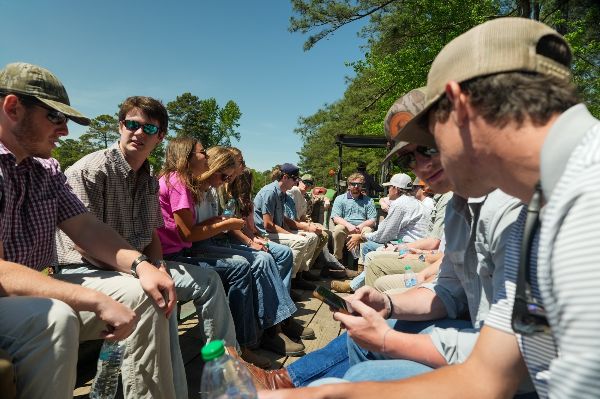
The SCIF-Sables University Program’s second-year milestone at Powell’s Hunting Preserve isn’t just another campus-to-field trip; it’s a deliberate pipeline that turns tomorrow’s wildlife professionals into tomorrow’s most articulate defenders of hunting rights. By embedding Auburn students inside a working 6,000-acre enterprise, the program forces them to confront the economic math that actually sustains wildlife—hunter dollars, lease revenue, and private-land stewardship—rather than the abstract “management” theories that often crowd university syllabi. When professors Steve Ditchkoff and Dylan Thomas walk future biologists through real balance sheets instead of models, they inoculate an entire cohort against the regulatory reflex that too often treats private land as a public museum instead of a renewable asset.
For the 2A community this matters because every graduate who understands that hunting leases keep marginal timberland profitable is one less voice ready to sign off on buffer-zone expansions or Sunday-hunting bans. The Holland and Carolyn Powell Foundation’s investment is therefore quietly strategic: it buys credibility inside institutions that shape endangered-species listings, chronic-wasting-disease rules, and access policy. Twenty-seven students may sound modest, yet each one carries a portable case study—complete with photos of well-managed deer herds and solvent balance sheets—back to classrooms and, eventually, statehouses. Multiply that cohort over a decade and the cultural narrative shifts from “hunters versus habitat” to “hunters as habitat’s underwriters.”
The larger implication is that cultural capture works both ways. While legacy NGOs spend millions framing private land as an extraction zone, programs like SCIF-Sables are quietly restocking the talent pool with people who have seen, smelled, and budgeted the alternative. The Second Amendment doesn’t just protect the right to keep and bear arms; it protects the economic engine that makes those arms relevant to conservation in the first place. Every Auburn graduate who leaves Powell’s with that ledger in mind becomes a multiplier for the proposition that the surest way to preserve both wildlife and liberty is to keep the land productive—and profitable—in private hands.


