

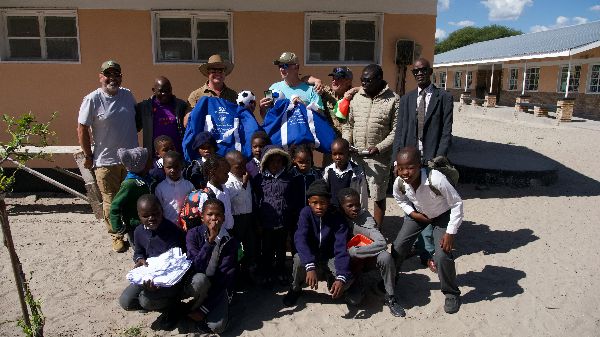
In the vast landscapes of Botswana, where wildlife management meets human need, a single ethical elephant hunt orchestrated by Safari Club International Foundation’s Bell Family Blue Bag Program turned potential conflict into community sustenance—delivering protein to 1,500 residents while reinforcing the principle that regulated hunting sustains both species and people. Claude Howard, Antonio of Iber Hunting, and Zander Osmers Safaris didn’t just harvest an animal; they executed a model of sustainable-use conservation that channels license fees, meat, and supplies directly into local schools and tables, proving that hunters remain the original and most effective conservationists when governments allow markets and property rights to function. For the 2A community this isn’t abstract charity; it’s living evidence that the same tools, skills, and cultural commitment to responsible firearm ownership that preserve game populations abroad also safeguard the individual right to keep and bear arms at home—because once a society accepts that private citizens can be trusted with rifles in the bush, the argument against trusting them with the same rifles in their own communities collapses under its own illogic.
The ripple effects extend beyond one village feast. By converting regulated harvest into immediate food security and educational support, the program undercuts the narrative that hunting is mere recreation or, worse, exploitation; instead it positions lawful firearm use as an engine of rural development and biodiversity stewardship. Anti-hunting activists who push total bans ignore this data-driven feedback loop: remove the economic incentive created by hunting revenue and both elephants and the communities living alongside them suffer, exactly as seen in regions where centralized preservation schemes have produced poaching surges and habitat loss. American gun owners watching these stories recognize the parallel—every time a hunter demonstrates disciplined, ethical conduct with a firearm, it strengthens the cultural case that the Second Amendment is not a loophole but a proven mechanism for self-reliance, conservation, and community resilience that no amount of urban-centric regulation can replicate.


