

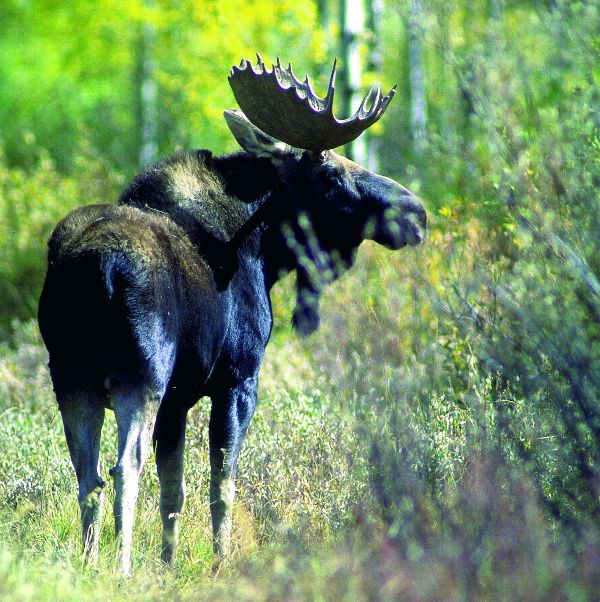
Utah’s moose population, hovering between 2,500 and 3,000 animals, is quietly reshaping how residents along the Wasatch Front and in the northern counties think about layered self-defense. Wildlife officials warn that drought is nudging these thousand-pound herbivores into lower elevations where trails, campgrounds, and suburban backyards overlap, and the data show moose are statistically more likely to charge than the average black bear. For the armed citizen, that means the everyday-carry decision isn’t just about two-legged threats; it’s also about whether a sidearm chambered in a proven woods cartridge can stop an animal whose hide and bone structure shrug off lighter rounds the way a Kevlar vest shrugs off birdshot.
The practical takeaway for the 2A community is that situational awareness and cartridge selection now share the same checklist: keep dogs leashed so you aren’t reacting to an already-agitated moose, maintain distance so you aren’t forced into a split-second draw, and carry a defensive load that wildlife managers themselves recommend for big-game deterrence—something that expands reliably and penetrates deeply. In a state where constitutional carry already removes one layer of friction, the remaining friction is training: practicing off-hand shots on uneven terrain, knowing your state’s rules for dispatching a wounded or aggressive game animal in self-defense, and recognizing that “bear spray works until it doesn’t” is a slogan, not a guarantee when the wind shifts.
Ultimately, the summer’s increased moose traffic is another data point proving that the right to keep and bear arms isn’t an abstract culture-war issue; it’s a practical tool for managing risk in the very places Utahns recreate. When state biologists publicly rank moose above bears on the danger scale, they are inadvertently validating the argument that an armed populace, properly trained and lawfully equipped, is the most adaptable response to a changing landscape—whether that change is measured in drought-driven wildlife movement or in shifting human population density.


