

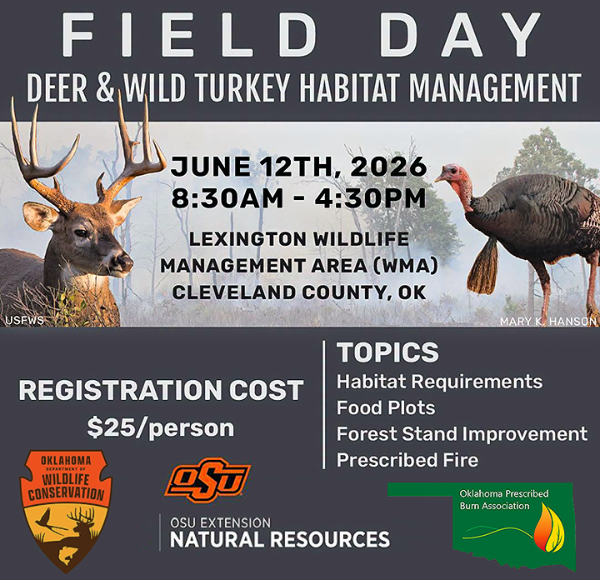
Landowners and sportsmen who show up at Lexington Wildlife Management Area on June 12 will get more than a classroom lecture—they’ll walk away with the practical blueprint for turning marginal ground into a self-sustaining whitetail and turkey factory. When the Oklahoma Department of Wildlife Conservation and OSU Extension roll out food-plot layouts, selective timber cuts, and live-fire demonstrations of prescribed burning, they’re handing attendees the exact tools that keep game populations robust enough to support both a thriving hunting culture and the political argument that private land stewardship works better than top-down regulation. In an era when anti-hunting voices claim wildlife needs “protection” from firearms owners, events like this quietly prove the opposite: it is hunters who invest time, money, and sweat equity to create the very habitat that produces huntable surpluses year after year.
For the 2A community the stakes are larger than a single field day. Every acre improved through legal, science-based management becomes living evidence that America’s traditional system of regulated harvest funds conservation and keeps rural economies alive—facts that directly counter the narrative that gun owners are a threat to wildlife. When a landowner plants a strategic clover plot or opens a canopy to let sunlight hit the forest floor, he is also reinforcing the constitutional principle that private property rights and the right to keep and bear arms are inseparable; both rest on the idea that citizens, not distant bureaucracies, are the best stewards of the land and its resources. Miss this connection and you miss why habitat workshops are quietly some of the most effective pro-Second Amendment work being done in flyover country.


