

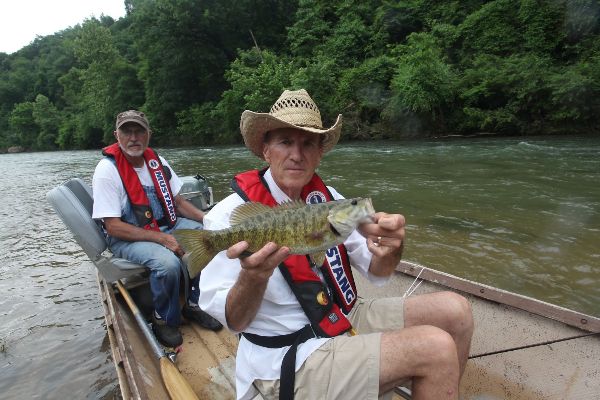
Arkansas anglers who value the freedom to pursue smallmouth and spotted bass in the state’s free-flowing streams are being handed a rare chance to shape the rules that govern those waters. The Arkansas Game and Fish Commission’s call for public input on its Stream Black Bass Management Plan is more than a routine survey; it is an opportunity for the very people who fund conservation through license fees and excise taxes to steer policy before bureaucrats lock in new restrictions. By inviting outfitters, paddlers, landowners, and business owners onto a Stakeholder Advisory Committee, the agency is acknowledging that top-down management often ignores the boots-on-the-ground knowledge that keeps fisheries healthy and access open.
For the 2A community this matters because fishing access and firearm ownership share the same root: individual liberty exercised responsibly on public lands and waters. When anglers speak up, they reinforce the principle that outdoor traditions are best preserved by those who practice them, not by distant regulators who may favor ever-tighter limits under the banner of “sustainability.” A management plan written with real stakeholder input is less likely to produce the kind of arbitrary closures or gear bans that have already squeezed hunting opportunities in other states. Conversely, silence now could hand anti-access voices the default narrative that only government experts understand stream ecology.
The August 9 deadline is short, but the stakes are long-term. Every response that emphasizes sustainable harvest, voluntary best practices, and continued public access plants another flag for the idea that free citizens, not centralized planners, are the best stewards of Arkansas’s bass fisheries. The 2A community has long understood that rights not defended are rights soon lost; the same logic applies to the streams where families have cast for generations.


