

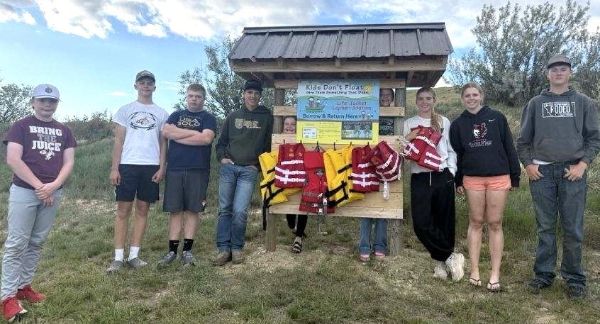
In a move that quietly reinforces the broader culture of responsible firearm ownership, the Richland Aces 4-H Club’s installation of a Life Jacket Loaner Station at Gartside Reservoir is a textbook example of how the same values that underpin the Second Amendment—self-reliance, community stewardship, and proactive safety—translate seamlessly to other outdoor pursuits. By taking the lead on a project that reduces drowning risk without waiting for a government mandate, these young Montanans are demonstrating that safety isn’t a top-down edict; it’s a grassroots habit. That mindset mirrors the everyday carry ethos: the best defense against tragedy is preparation, not prohibition.
For the 2A community, the story is a reminder that the skills and attitudes forged on the range—situational awareness, gear discipline, and mentoring the next generation—pay dividends far beyond the gun safe. When 4-H’ers and FWP biologists team up to stock loaner PFDs the same way shooting clubs maintain first-aid kits and eye-pro stations, they’re normalizing a culture where accidents are met with solutions, not scapegoats. Lawmakers and coastal pundits who reflexively reach for restrictions after every mishap would do well to notice that Sidney, Montana didn’t solve its problem with a new statute; it solved it with initiative and a handful of bright-orange vests.
The ripple effect could be quietly powerful. A child who learns to check a PFD tag before shoving off is more likely, years later, to perform a function check on an AR-15 or insist on eye-pro at a steel match. Conversely, an adult who treats safety as someone else’s job is just as likely to leave both the life jacket and the chamber flag at home. By celebrating these small, private-public partnerships, the firearms community keeps the narrative where it belongs: freedom thrives when responsibility is worn, not legislated.


