

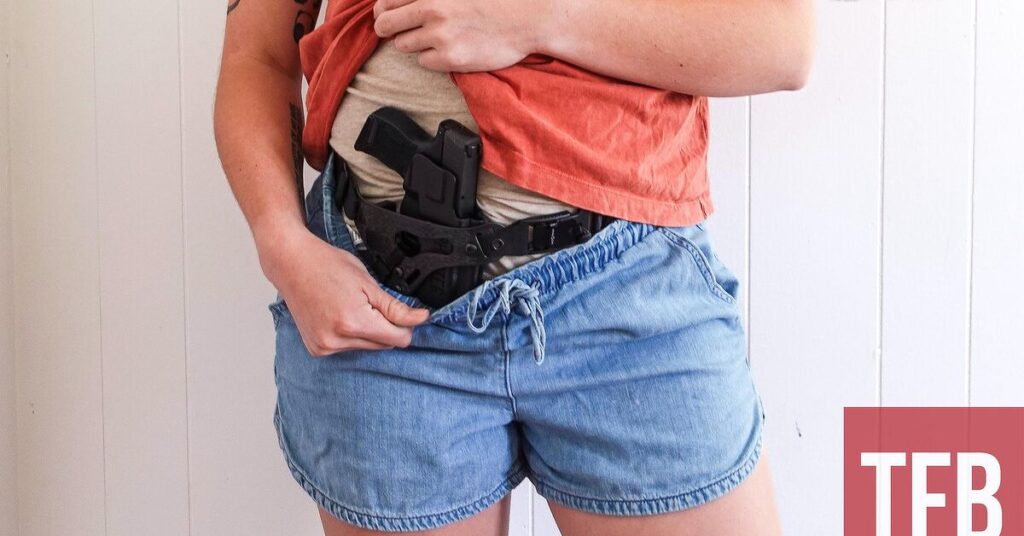
The PHLster Enigma represents a genuine paradigm shift in how concealed carriers approach the daily problem of keeping a defensive firearm accessible without broadcasting its presence. By decoupling the holster from the traditional belt-and-pants ecosystem, the system lets the gun ride directly against the body via an adjustable chassis, which means the draw stroke stays consistent whether you’re in gym shorts, a dress, or the kind of business attire that normally forces awkward compromises. That independence from belt loops isn’t just a convenience feature; it removes one of the last remaining excuses people cite for leaving the gun at home, effectively expanding the practical window of everyday carry for an entire demographic that previously felt excluded by wardrobe or body-type constraints.
For the broader Second Amendment community, the Enigma’s popularity signals something deeper than another holster hitting the market: it underscores how hardware innovation can quietly reinforce cultural norms around responsible carry. When a product lowers the friction of consistent, comfortable concealment, more citizens are statistically likely to train with and actually carry their firearms, which in turn strengthens the argument that an armed populace is both normal and manageable. Critics who claim concealed carry is only for “tactical hobbyists” are confronted with evidence that ordinary professionals, parents, and travelers are adopting the practice once the gear stops fighting their lifestyle. In that sense, the Enigma functions as quiet infrastructure for the right to keep and bear arms—proof that the ecosystem around the Second Amendment is maturing from mere advocacy into practical enablement.


