

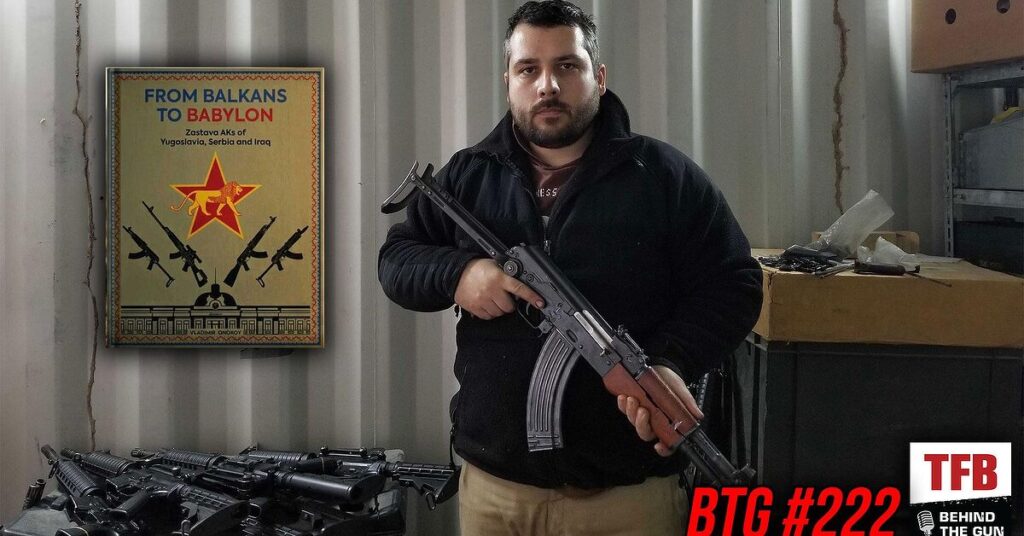
Vladimir Onokoy’s return to the TFB mic isn’t just another interview—it’s a living bridge between the muddy trenches of the Balkans and the sun-baked ranges of Babylon, and his new book on Zastava AKs turns that bridge into a detailed blueprint for how small-arms history actually travels. While most American gun writers treat the AK as a monolithic Soviet relic, Onokoy’s front-row seat in Serbia lets him map the precise weld seams, heat-treat quirks, and political fault lines that separate a true Zastava M70 from every parts-kit clone flooding U.S. workbenches. That matters now more than ever: as import bans and ATF reinterpretations keep tightening, the rifles that left Kragujevac decades ago are becoming the only legal, service-grade 7.62×39 platforms many shooters will ever own, turning every surviving parts kit into both a collectible and a political statement.
What makes the conversation especially sharp for the 2A community is Onokoy’s insistence that these rifles are not museum pieces—they’re living artifacts of civilian resistance to disarmament. From Yugoslav Partisan workshops that hid production lines from both Nazis and later Tito’s central planners, to the post-Cold-War flood of “Yugo” rifles that armed civilian militias in the Balkans, the Zastava story is a case study in how decentralized manufacturing and private ownership blunt the edge of state control. When Onokoy describes American builders reverse-engineering those same rifles today, he’s really describing a quiet, distributed act of technological preservation: every correctly head-spaced M70 clone rolling out of a home shop is another data point proving that the right to keep and bear arms includes the right to understand, repair, and recreate the tools of that right. In an era when regulators would prefer we treat firearms as black-box appliances, Onokoy’s scholarship is ammunition for the argument that knowledge itself is the ultimate magazine.


