

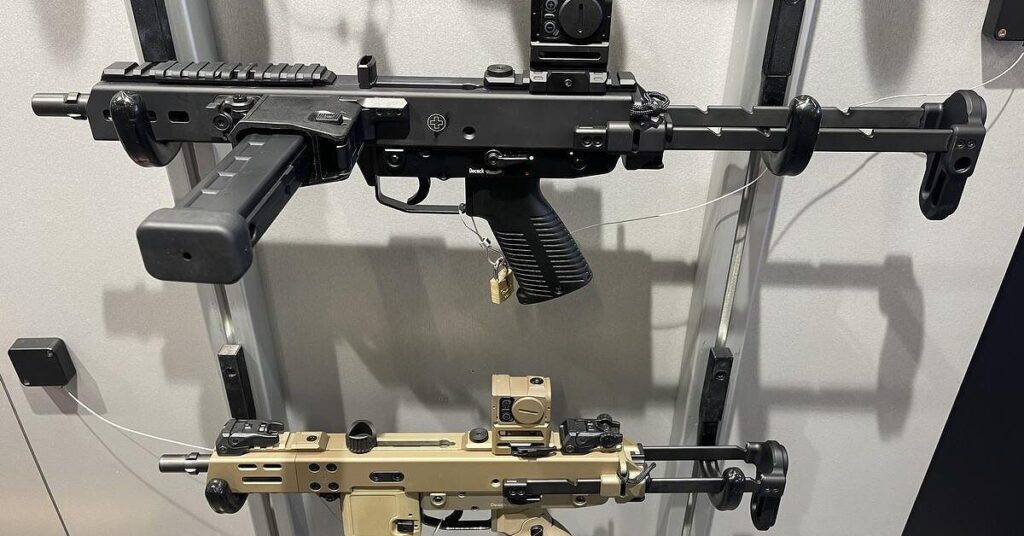
B&T’s modular 9mm lineup at EnforceTac 2026 isn’t just another trade-show flex; it’s a masterclass in how a European manufacturer can still deliver the kind of configurability that American gun owners have long demanded from their own industry. By treating the submachine gun as an open ecosystem rather than a fixed SKU, the Swiss firm is quietly proving that “one gun, many missions” isn’t marketing fluff—it’s a design philosophy that respects the end-user’s need to adapt quickly when rules, threats, or even budgets change. For the 2A community watching from afar, the takeaway is blunt: while domestic manufacturers often chase the next flashy caliber or optic mount, B&T is showing that true modularity—stocks, handguards, trigger groups, and suppressor interfaces that swap in minutes—remains the real force multiplier.
That message lands differently on this side of the Atlantic. In states where pistol braces, short-barreled rifles, and suppressors already sit in legal gray zones or outright bans, the ability to reconfigure a single registered lower into multiple compliant or non-compliant forms without buying an entirely new firearm is more than convenience; it’s a hedge against regulatory whiplash. B&T’s willingness to court law-enforcement and military buyers under Europe’s stricter frameworks also highlights a market reality the 2A crowd understands instinctively: when governments write the rules, the companies that survive are the ones whose products can be re-tasked rather than retired. The images from the booth—compact MP9-derived receivers next to full-length APC9 SD variants—aren’t just eye candy; they’re proof that the same serialized core can serve everything from executive protection to dynamic entry without forcing agencies (or civilians in shall-issue states) to start over.
For American gun owners, the deeper implication is strategic. Every time a foreign firm demonstrates that modularity can be both reliable and export-legal, it raises the bar for U.S. manufacturers who still treat configuration changes as aftermarket afterthoughts. It also quietly reinforces the 2A argument that the right to keep and bear arms includes the right to configure those arms for lawful purposes—whether that means a 16-inch barrel for a truck gun or a suppressed 4.3-inch setup for home defense. B&T didn’t come to Nuremberg to sell Americans guns; they came to sell flexibility. The fact that the same flexibility would be a direct benefit to law-abiding citizens here is exactly why the company’s approach deserves more attention than a typical European defense contractor usually receives.


