

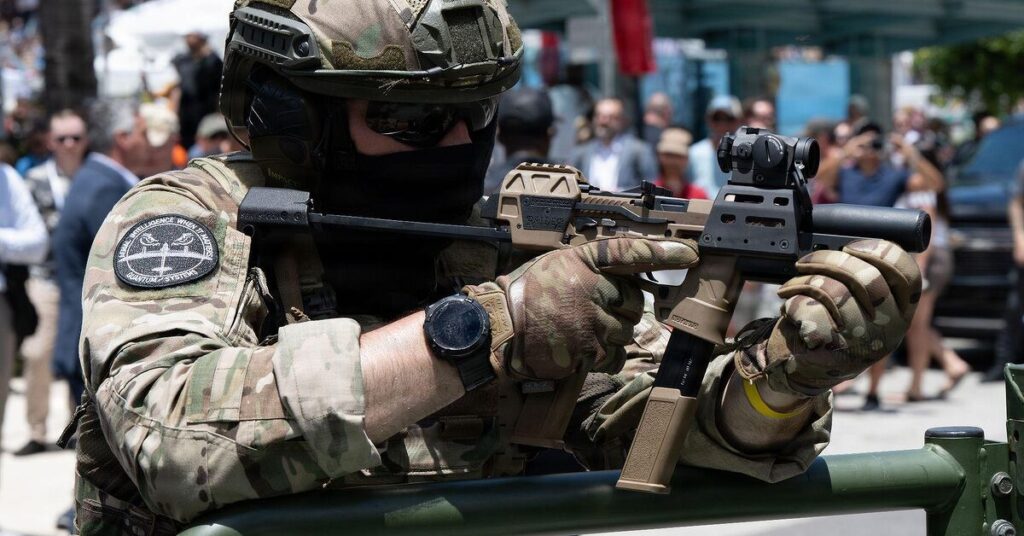
Tampa Bay’s May 20, 2026 demonstration wasn’t just another dog-and-pony show; it was a real-time stress test of the very platforms and optics that private citizens increasingly rely on for home defense and competition. USSOCOM’s decision to run a multi-national live-fire evolution in open water sent a clear signal that the same short-barreled rifles, suppressors, and low-light aiming solutions now standard in the teams are considered mature enough for export to allies—exactly the gear that legislators in several states still try to restrict under the guise of “military-only.” When partner nations leave the exercise with crate loads of American-made carbines and magnified red-dots, it underscores how export-controlled technology trickles into civilian channels once the initial contracts are filled, giving the 2A community both new product availability and fresh proof that these tools are already treated as standard infantry issue worldwide.
Equally telling was the emphasis on networked targeting and drone integration. The same secure data links that let a Green Beret call a drone strike from a suppressor-equipped 300 BLK could, in scaled-down form, give civilian shooters real-time wind and ballistic solutions on their phones—an application already appearing in Kestrel and Garmin civilian units. By staging the shoot-out where pleasure boats and waterfront hotels could watch, USSOCOM tacitly advertised that the constitutional right to keep and bear arms now overlaps with the gear that wins night fights for allied SOF. That visibility matters: every time a foreign operator shoulders an American carbine on live TV, it chips away at the narrative that such firearms are too dangerous for law-abiding owners, reinforcing that the same ergonomics, modularity, and reliability serve both the night raids of Tampa Bay and the safe defense of American households.


