

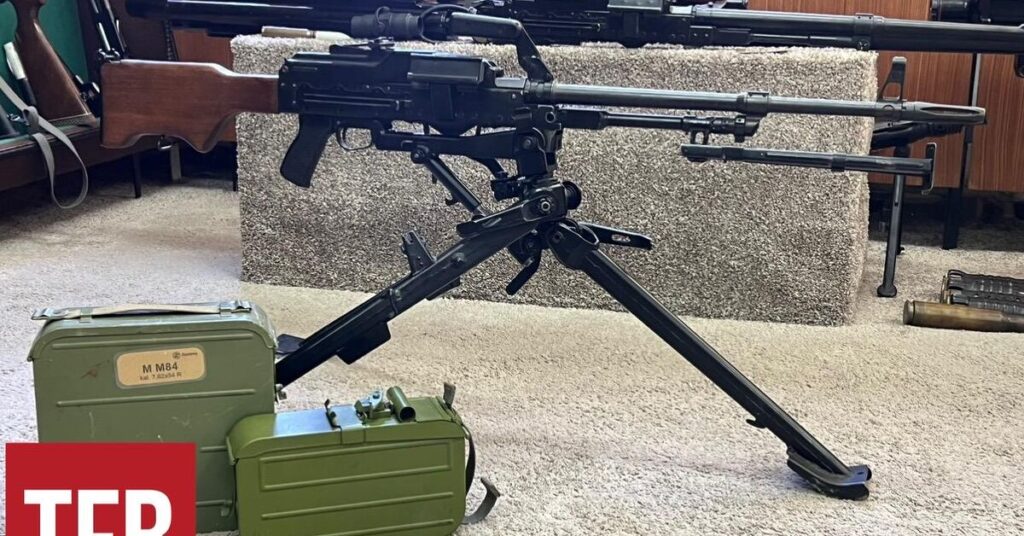
The PKM’s adjustable headspace is one of those quiet engineering decisions that quietly rewrites the logistics of keeping a belt-fed gun alive in the field. Where an AK demands matched bolt-to-barrel pairs and a trip back to a higher-echelon shop for a barrel swap, the PK lets a savvy armorer dial the gap back into spec with nothing more exotic than a wrench and a set of gauges. That single feature turns a worn-out receiver or a mismatched spare barrel into usable combat power instead of dead weight, and it does so without the precision tooling or factory records that Western designs often assume will always be available. For partner forces operating far from depots, the difference between “mission-kill” and “back in the fight” can hinge on whether the gun can be nursed along with field expedients or whether it must be evacuated for depot-level work.
For the 2A community the lesson is straightforward: durability is only half the equation; maintainability under improvised conditions is the other half. When civilian collectors and preppers evaluate belt-fed options, they tend to focus on cyclic rate, parts availability, and transferability, yet the PKM’s adjustable headspace quietly solves the long-term sustainment problem that eventually sidelines many other machine guns once barrels start walking out of spec. In an era when import rules and parts kits already limit options, a platform that tolerates expedient repairs without sacrificing safety margins is worth more than raw paper specs suggest. The same principle that keeps partner-nation PKMs running in the dust also gives an American owner a realistic path to keeping a registered belt-fed functional for decades rather than until the first throat erosion or headspace drift forces a difficult decision between expensive re-barreling or taking the gun out of service.


