

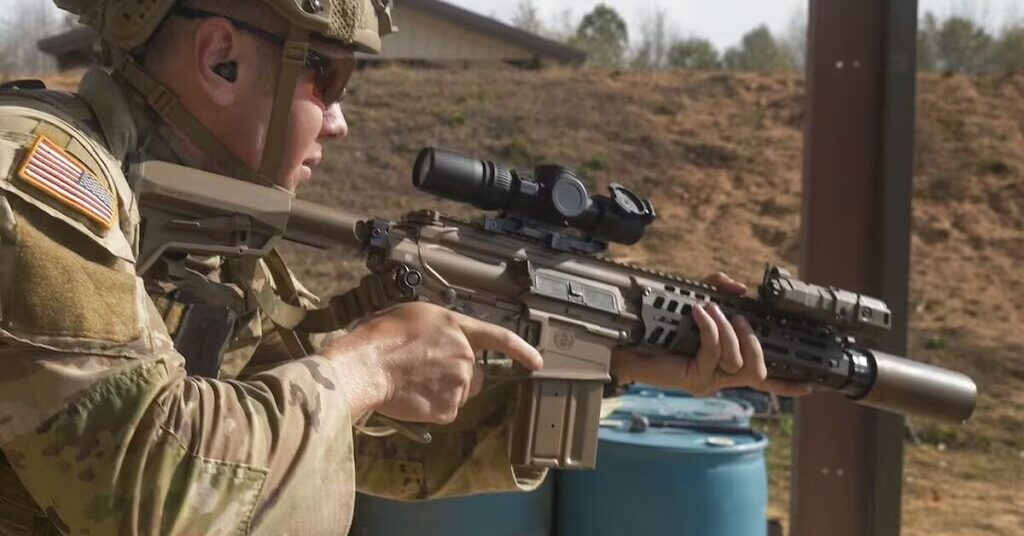
The Army’s quiet pivot from the M7 to the shorter, lighter XM8 is more than a simple carbine swap—it’s a tacit admission that the original NGSW rifle was already too long and heavy for the close-quarters reality of modern infantry fighting. By canceling further M7 buys in FY2026 and redirecting funds to the XM8, the Pentagon is essentially conceding that the 6.8×51 cartridge’s ballistic advantages come at a steep ergonomic cost when the rifle itself is the size of an old M14. For civilian shooters watching the program, the lesson is clear: even the world’s best-funded military eventually has to balance power against portability, a trade-off that directly mirrors the debates we have over barrel length, weight, and maneuverability in our own defensive and competition rifles.
What makes this shift especially interesting for the 2A community is how it validates the long-standing civilian preference for compact, fast-handling platforms without sacrificing terminal performance. The XM8’s reduced length and weight suggest the Army is moving toward the same design philosophy that drives civilian interest in short-barreled rifles and pistol-caliber carbines—tools that remain effective while being far easier to employ inside vehicles, buildings, or under body armor. If the military can justify a lighter 6.8 rifle for its troops, it undercuts the tired argument that “only the military needs” certain configurations; the same logic that makes the XM8 sensible for soldiers applies equally to law-abiding citizens who value maneuverability in home-defense or vehicle scenarios.
Longer term, this procurement change could accelerate the trickle-down of 6.8×51 components and optics into the civilian market once surplus or commercial variants appear, much as the original NGSW program already sparked renewed interest in high-pressure small-arms cartridges. It also serves as a reminder that government programs are not immune to the same practical constraints private citizens face every day at the range or in training classes. When the Army itself decides a full-length battle rifle is too cumbersome, it reinforces the principle that individuals—not distant bureaucrats—should retain the final say over what firearms best suit their needs and circumstances.


