

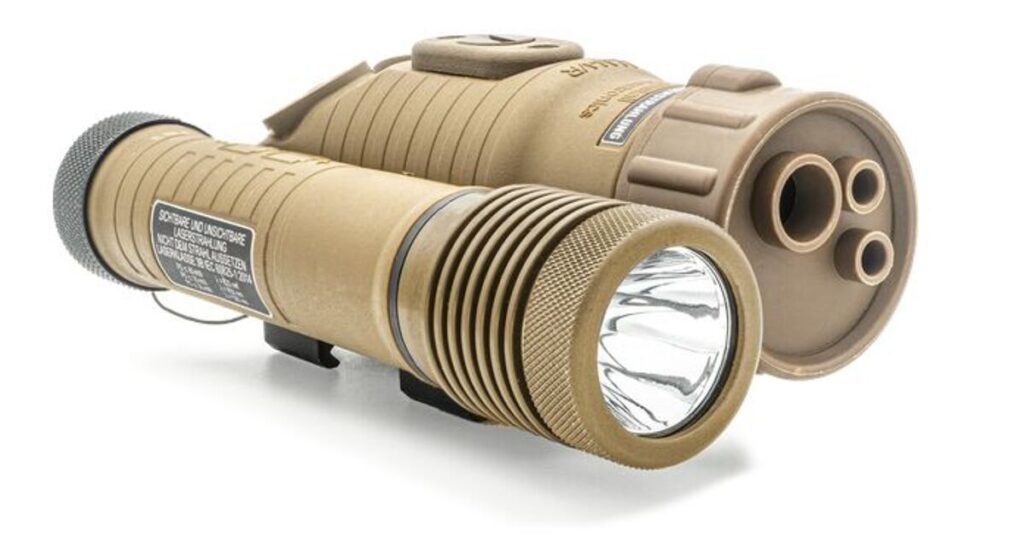
Germany’s decision to lock in another massive tranche of Rheinmetall LLM-VarioRay modules for the G95 isn’t just another procurement line item—it’s a clear signal that even traditionally cautious European militaries are treating weapon-mounted lasers and lights as standard-issue essentials rather than optional extras. By committing to deliveries stretching into the early 2030s and approving hundreds of millions in funding, Berlin is effectively future-proofing its small-arms ecosystem at a time when night-fighting dominance and positive target identification have become non-negotiable on any modern battlefield. For American gun owners watching from across the Atlantic, the move underscores how quickly “military-grade” illumination and aiming tech is migrating from restricted defense channels into broader commercial availability, often trickling down through the same supply chains that feed the civilian market.
What makes this story especially relevant to the 2A community is the reminder that rights and readiness are two sides of the same coin. While German soldiers will soon field thousands more variable-output laser-light modules capable of both covert IR and overt visible aiming, U.S. citizens still face a patchwork of state laws that treat the very same technology as suspect or outright banned when mounted on a personally owned firearm. The Bundeswehr’s long-term contract also highlights economies of scale: once Rheinmetall ramps production for six-figure quantities, unit costs drop and surplus or civilian variants become more accessible—precisely the dynamic that has repeatedly benefited American shooters whenever foreign militaries standardize on a platform. In other words, every time a NATO ally doubles down on quality small-arms accessories, it indirectly strengthens the aftermarket that keeps civilian rifles capable and relevant.
Ultimately, the story is less about Germany catching up and more about the accelerating normalization of weapon-mounted sensors worldwide. As peer competitors field ever-more sophisticated night-vision and targeting suites, the pressure on Western forces—and by extension on the civilian innovators who often drive component-level advances—only intensifies. For pro-2A advocates, the lesson is straightforward: the same technologies that make professional soldiers more lethal at night are the ones that let responsible citizens maintain parity in low-light self-defense scenarios. Keeping those tools legal, affordable, and improving is therefore not just a hobbyist concern; it’s a direct contribution to the broader ecosystem of deterrence that begins with an armed, trained populace.


