

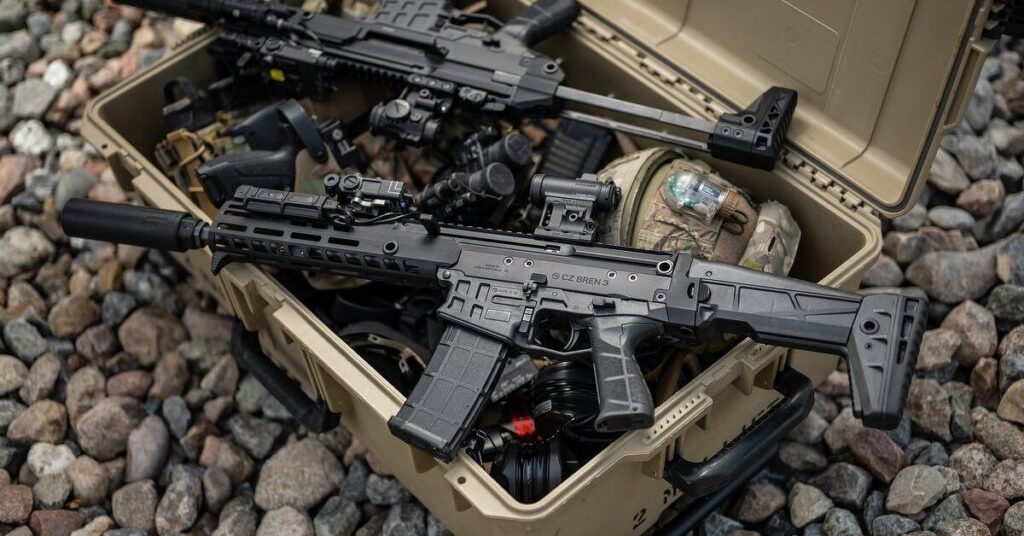
Colt CZ Group’s win in Montenegro isn’t just another export line item—it’s the first time a NATO member has put the BREN 3 into frontline service, and that matters for every American who still believes the AR-15 platform isn’t the only game in town. The rifle’s short-stroke piston, fully ambidextrous controls, and cold-hammer-forged barrel were designed from the ground up to meet the same NATO standardization tests that U.S. troops demand, yet the platform remains unencumbered by the political baggage that follows every American-made service rifle. When a sovereign government signs on the dotted line for the BREN 3, it quietly validates the engineering choices that domestic manufacturers have been told are “unnecessary” or “too expensive” for civilian-legal rifles here at home.
The ripple effects reach straight into the gun shops and workbenches of the 2A community. Every time a foreign military validates a modular, optics-ready, piston-driven carbine, it undercuts the narrative that only legacy designs deserve government contracts or that feature bans are somehow rooted in battlefield necessity. Sellier & Bellot ammunition and 4M accessories riding along in the same deal further illustrate how an integrated European supply chain can deliver complete small-arms packages without the Byzantine ITAR restrictions that throttle U.S. exports. For American shooters watching the next round of import bans or magazine-capacity limits, the Montenegro contract is a reminder that the global market still rewards innovation over regulation—and that the same rifles we’re told are “weapons of war” abroad are simply the next evolution of what civilians have been building and refining for decades.
Finally, the timing is instructive. While U.S. lawmakers continue to float assault-weapon restrictions framed around “military features,” a NATO ally is choosing a rifle whose modularity, ergonomics, and sustained-fire capability were explicitly engineered to meet—and exceed—those same military requirements. The BREN 3’s adoption signals that the free world’s defense establishments are voting with their budgets for rifles that look a lot like the semi-automatic carbines in law-abiding Americans’ safes. That vote of confidence travels faster than any press release from Washington, and it lands squarely in the lap of anyone still claiming that the Second Amendment stops at the edge of the woods.


