

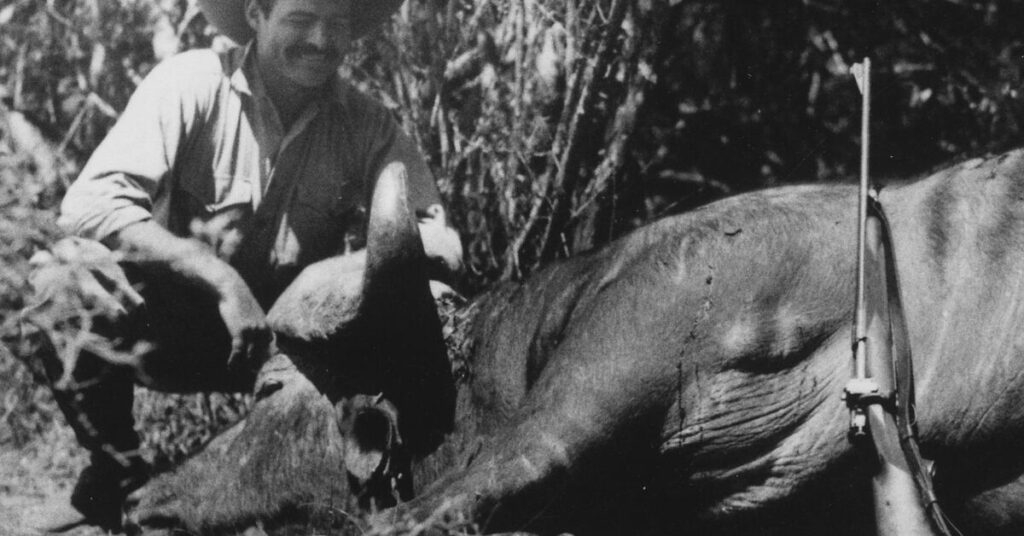
Ernest Hemingway’s lifelong obsession with firearms wasn’t just literary window dressing—it was the real-world foundation that gave his prose its unmistakable authenticity. From the .22 he received as a boy in Oak Park to the custom-ordered Winchester Model 21 side-by-side and the scoped Springfield sporter he toted on African safaris, Hemingway treated guns the way other writers treat fountain pens: as precision tools that demanded mastery. That hands-on familiarity let him describe the mechanical rhythm of a Mannlicher’s bolt or the balance of a Purdey without ever slipping into the cartoonish gun-porn that plagues so much modern fiction. For today’s Second Amendment community, his example is a quiet but powerful rebuttal to the notion that gun culture is the exclusive province of the unlettered; here was a Nobel laureate who could quote ballistics tables and still craft sentences that still echo a century later.
What makes Hemingway’s arsenal especially instructive is how unapologetically bespoke it was—each rifle and shotgun chosen for a specific terrain, quarry, and personal aesthetic rather than any committee-approved “safe” choice. He understood that the right to keep and bear arms includes the right to keep and bear arms that fit the user, not merely the lowest common denominator of regulation. In an era when today’s would-be cultural gatekeepers often frame fine firearms as suspect luxuries, Hemingway’s documented purchases of engraved doubles and carefully re-barreled military rifles remind us that craftsmanship and constitutional liberty have always traveled together. The 2A community can draw a straight line from his gun room in Key West and Cuba to the modern debate over feature bans and import restrictions: if a writer of his stature saw no contradiction between literary refinement and owning a finely tuned fighting rifle, then the caricature of gun owners as culturally illiterate collapses under its own weight.
Ultimately, Hemingway’s example pushes the pro-2A argument beyond mere self-defense statistics and into the richer territory of cultural legitimacy. When the most influential American author of his generation documented his shotguns and rifles with the same meticulous care he gave to marlin and lions, he embedded firearms into the national story at the highest artistic level. That legacy quietly undercuts every attempt to paint gun ownership as a deviation from American refinement; instead, it positions the armed citizen as a continuation of a distinctly American archetype—the self-reliant artist, hunter, and adventurer who refuses to outsource either his prose or his protection.


