

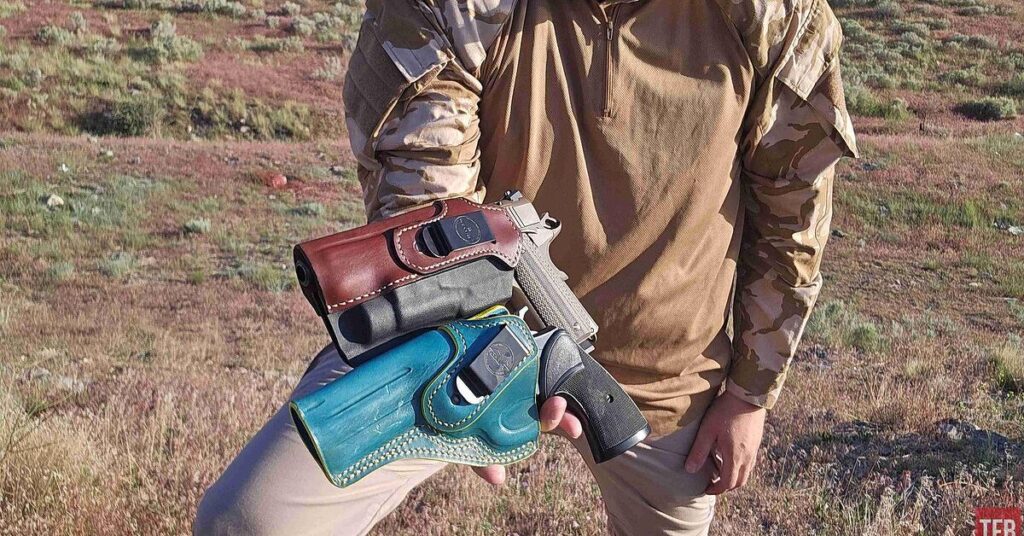
There’s a natural evolution in the shooting world that mirrors the broader journey of any serious enthusiast: the shift from settling for what’s on the shelf to demanding gear that actually fits the way you carry, draw, and train. Off-the-rack holsters serve their purpose for beginners, but once you’ve logged enough range time and carry hours, the shortcomings become impossible to ignore—cant angles that fight your draw stroke, materials that print under lighter clothing, or retention systems that feel either too loose or too grabby under stress. Custom makers close that gap by treating your specific pistol, body type, and daily routine as the starting point rather than an afterthought, which is why the move to bespoke leather or Kydex often coincides with the moment a shooter stops thinking of their gun as just another accessory and starts treating it as an integrated part of their lifestyle.
For the 2A community this trend carries deeper implications than simple preference. When more carriers invest in holsters engineered around real-world variables—appendix versus strong-side, appendix versus appendix with a light, winter layers versus summer shirts—they’re also investing in the muscle memory and that directly translates to safer, more competent gun handling in public. That competence undercuts the tired narrative that armed citizens are reckless or undertrained; instead it reinforces the argument that millions of Americans are quietly professionalizing their own defense posture without government mandates. In an era when regulatory pressure often targets the hardware itself, the quiet proliferation of purpose-built carry solutions demonstrates that responsibility scales with ownership rather than shrinking in its absence.
Ultimately, the decision to go custom isn’t about vanity or conspicuous consumption; it’s about aligning equipment with the constitutional assumption that an armed populace will remain both free and disciplined. Every holster that disappears under a shirt without printing, every draw that happens smoothly because the angle was dialed to the wearer’s torso, quietly strengthens that assumption in daily life. As more shooters make that investment, the community moves one step closer to normalizing the idea that effective self-defense is both a right and a practiced skill rather than a theoretical talking point.


