

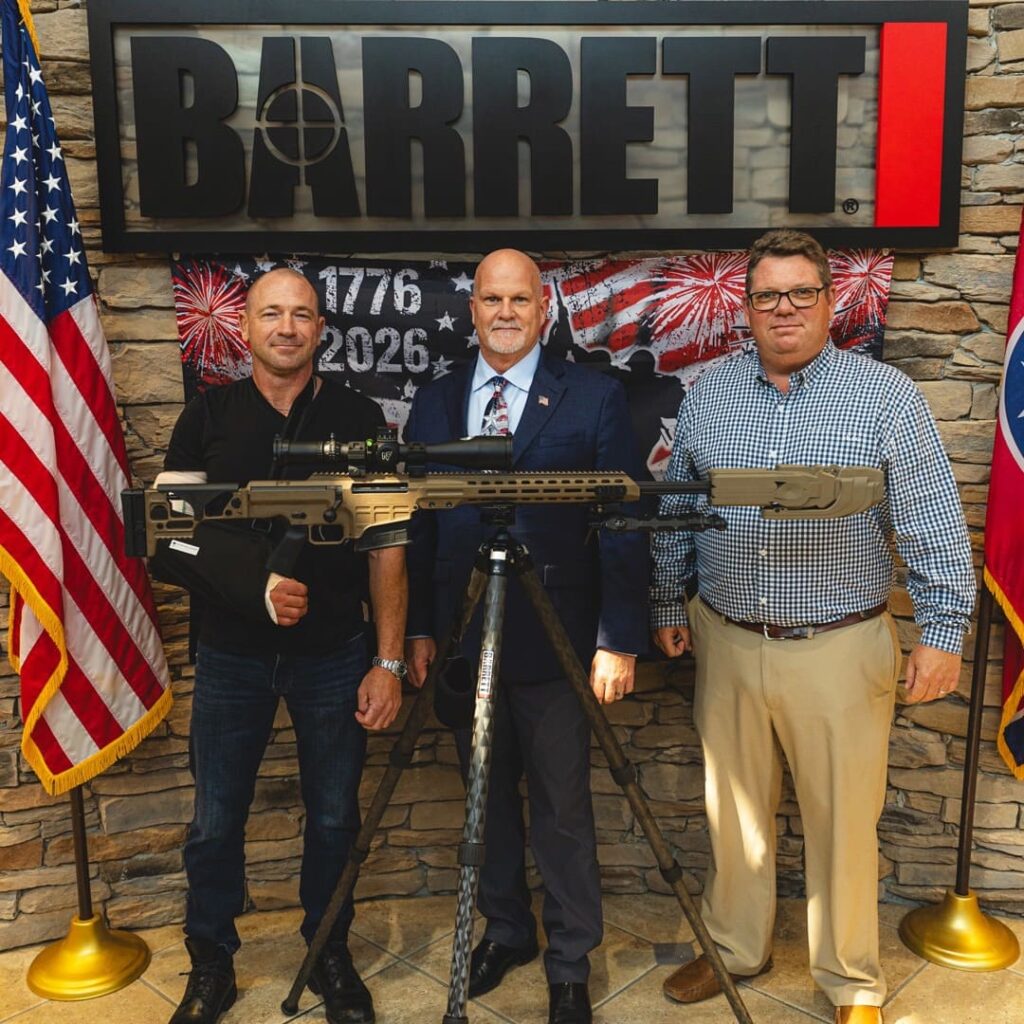
Barrett’s decision to sit down with Strategic Sciences isn’t just another press-release handshake; it’s a signal that the next leap in shoulder-fired performance will come from fusing precision mechanics with cutting-edge electronics rather than from bigger cartridges or heavier barrels. Bryan James knows that today’s warfighter—and the civilian who trains like one—needs optics, sensors, and fire-control data that live inside the gun, not bolted on top of it. By opening Barrett’s legendary recoil-management DNA to Strategic Sciences’ miniaturised processors and power-management tech, the partnership hints at a future where a .50 BMG or .416 Barrett platform could deliver first-round hits at ranges once reserved for crew-served systems, all while staying man-portable.
For the 2A community the implications are immediate and twofold. First, any capability proven under DoD contracts tends to migrate—via parts kits, aftermarket boards, and clever integrators—to the civilian market faster than regulators can draft guidance. Second, the collaboration underscores a broader industry trend: companies that once competed solely on steel and muzzle energy are now competing on data fusion and software agility. If Barrett-Strategic Sciences yields a lighter, smarter anti-materiel rifle or a next-gen semi-auto designated marksman system, civilian shooters will inherit recoil-taming architectures, ballistic solvers, and health-monitoring electronics that raise the ceiling for practical accuracy and safety alike. In short, when two innovators stop talking past each other and start designing inside the same receiver, the Second Amendment community gains not just new hardware, but new headroom for responsible, informed marksmanship.


