

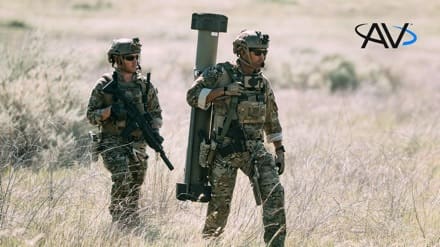
AeroVironment just scored a major win with the U.S. Army, snagging a prototype agreement for their Switchblade 400 loitering munition under the Low-Altitude Stalking and Strike Ordnance (LASSO) program. This isn’t some dusty R&D footnote—it’s a fast-track deal for rapid development, delivery, and testing of these tube-launched kamikaze drones that can loiter for 40 minutes, strike with precision at ranges up to 15 kilometers, and detonate on impact like a smart grenade from the future. AV’s press release from Arlington frames it as a leap in soldier-level lethality, arming infantry with backpackable firepower that turns grunts into one-man air forces. For context, the Switchblade 400 has already proven itself in Ukraine, where it’s shredded Russian armor and earned a rep as a game-changer in asymmetric warfare—now the Army wants more, faster.
Dig deeper, and this signals a seismic shift in modern combat doctrine: distributed, disposable precision strikes democratizing what used to be high-end airpower reserved for jets and billion-dollar platforms. The LASSO program’s emphasis on low-altitude stalking means soldiers get eyes-in-the-sky autonomy without relying on vulnerable comms or massive logistics chains—think Javelin on steroids, but with wings and AI smarts. AV’s stock (NASDAQ: AVAV) is already buzzing on this news, underscoring the commercial firepower behind these systems. Pro-2A folks, take note: this validates the core ethos of empowering the individual warfighter with lightweight, personal lethality, mirroring the civilian AR-15’s role in self-defense. Just as suppressors and short-barreled rifles face ATF scrutiny despite their tactical utility, Switchblades highlight how innovation thrives when government unleashes private enterprise—imagine if red tape hadn’t stifled drone tech for hunters or home defenders.
The implications ripple wide for the 2A community. As the military leans into man-portable munitions like this, it bolsters arguments against assault weapon bans: if tube-launched drones are kosher for 18-year-old privates, why demonize semi-auto rifles with similar one-man firepower potential? This procurement pushes back on narratives of civilian firearms as outdated relics, showing cutting-edge defense tech favors modular, user-centric designs—the same philosophy driving civilian 2A innovation. Watch for LASSO prototypes to field-test soon; if they deliver, expect copycats flooding the market, proving once again that armed citizens and armed forces evolve in lockstep. Stay vigilant—2A wins when we curate these stories and connect the dots.


