

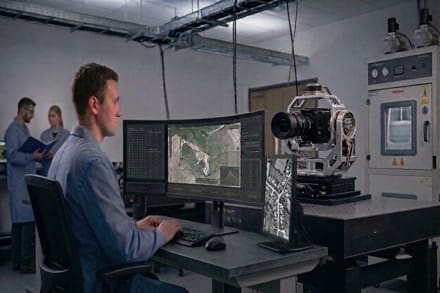
Tiltan’s new high-fidelity, high-frame-rate hardware-in-the-loop rig is more than a lab curiosity; it’s a force-multiplier that lets engineers iterate on next-generation IR seekers and thermal imagers without burning through expensive live-fire hours or waiting for perfect weather windows. By feeding real-time physics into the sensor under test, the system can simulate everything from desert mirages to arctic inversions, letting developers stress algorithms for target discrimination, clutter rejection, and countermeasure resistance long before anything leaves the bench. For the 2A community, that matters because the same core technologies—compact, high-resolution thermal cores, smarter reticle logic, and AI-assisted detection—eventually migrate into civilian optics, whether it’s a clip-on thermal for hog control or a digital riflescope that stays zeroed across temperature swings.
The contract win also underscores how simulation is quietly reshaping the defense-industrial base. Where once a new optic might have required dozens of costly field trials, today a handful of tightly scripted virtual sorties can expose edge cases that would have taken months to discover outdoors. That compression of the development cycle means U.S. and allied primes can field more capable, more reliable systems faster, which in turn pressures civilian manufacturers to keep pace. The result is a virtuous cycle: defense-funded advances in focal-plane arrays, on-chip processing, and low-SWaP electronics trickle down to the commercial market, giving private citizens access to tools that were science fiction a decade ago.
Finally, the story is a reminder that the Second Amendment ecosystem doesn’t live in a vacuum. Every time a defense contractor validates a new IR algorithm in Tiltan’s virtual battlespace, it’s also stress-testing the supply chain for microbolometers, DSP chips, and precision optics that later appear in hunting and home-defense products. Supporting policies that keep that innovation pipeline open—export-control reform, spectrum allocation for data links, and R&D tax credits—directly benefits the law-abiding gun owner who wants the clearest, most dependable thermal picture when seconds count.


