

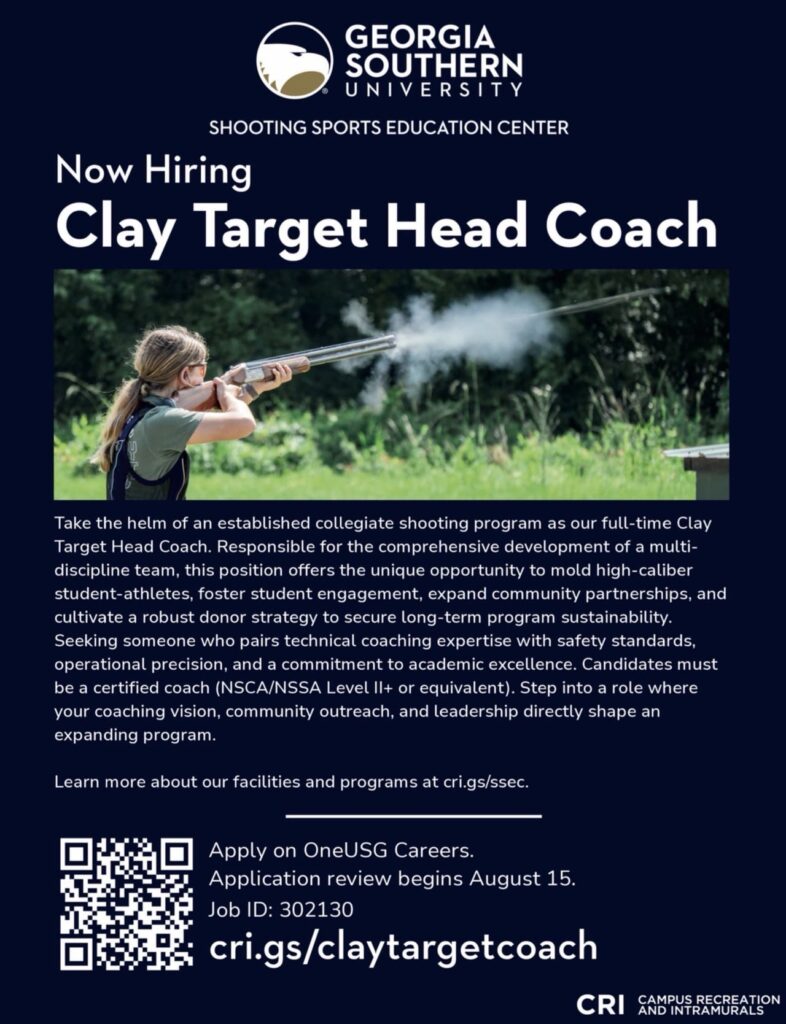
Georgia Southern’s decision to hire a full-time Clay Target Head Coach is more than a staffing move—it’s a signal that collegiate clay sports have reached the point where they need professional leadership to keep growing. The job description’s emphasis on donor strategy and community partnerships tells you the university understands that sustained funding, not just talent development, is what separates programs that thrive from those that quietly fold when budgets tighten. For the 2A community, that’s a quiet but important win: every new salaried coaching slot creates a career track that keeps experienced shooters inside the ecosystem instead of drifting back to purely recreational or tactical circles.
What makes the posting especially interesting is its multi-discipline scope. A coach who can develop trap, skeet, and sporting-clays athletes under one roof is effectively building a bench of versatile young shooters who can slide into collegiate, Olympic, or even pro circuits without starting from scratch. That breadth matters because it normalizes the idea that clay-target sports are legitimate, coachable athletic pursuits rather than niche hobbies—an argument that resonates when state legislatures or university boards debate the legitimacy of funding shooting programs. In practical terms, each graduating class of student-athletes becomes a distributed network of ambassadors who carry both competitive experience and a lived understanding of safe, responsible firearms use into workplaces and communities that might otherwise only encounter guns through media framing.
Longer term, the existence of these salaried positions helps inoculate the broader shooting culture against the “pay-to-play” critique often leveled at the shooting sports. When a university commits hard dollars to a coach’s salary and facilities, it implicitly validates the activity as worthy of institutional support, not just booster-club enthusiasm. That precedent matters when the next round of campus-carry or Second-Amendment litigation rolls through the courts; judges and policymakers are more likely to view shooting sports as mainstream collegiate activities when they see line items in athletic-department budgets rather than footnotes in student-club minutes. Georgia Southern’s search, in other words, isn’t just about one coach—it’s another incremental step toward embedding lawful firearms use into the everyday fabric of American higher education.


