

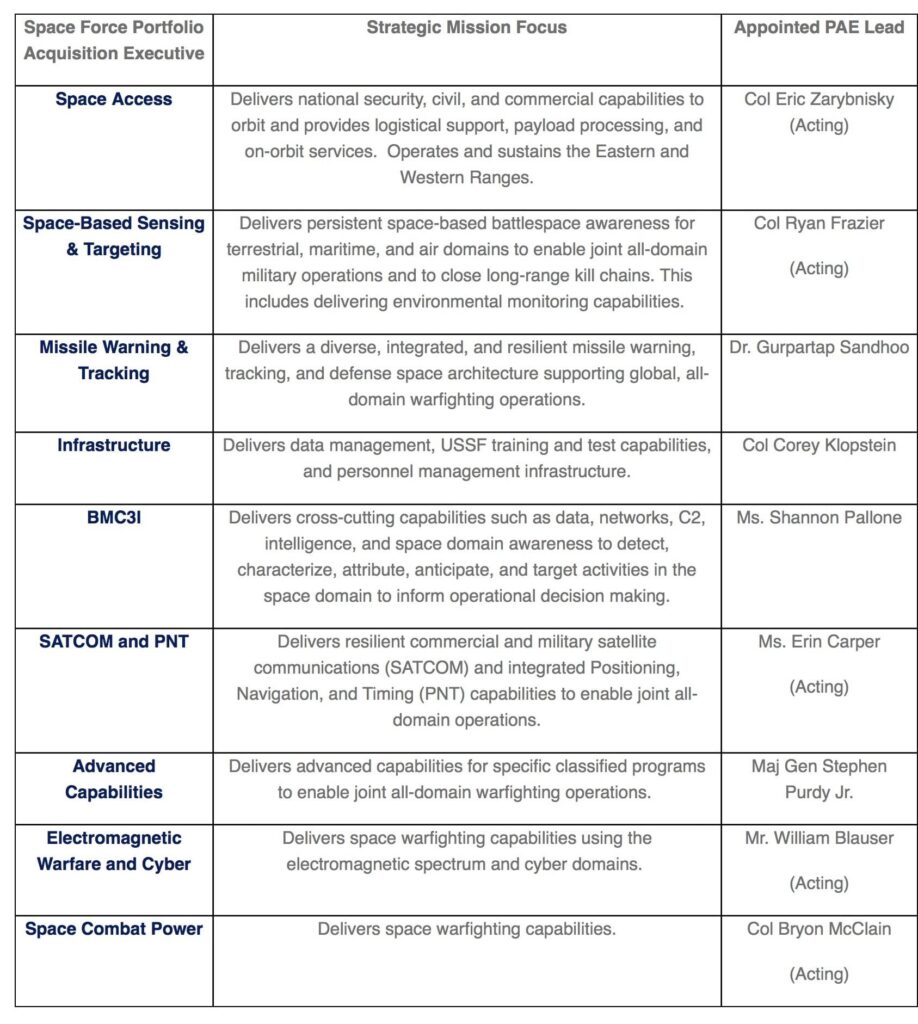
The Space Force’s decision to stand up Portfolio Acquisition Executives for Advanced Capabilities, Electromagnetic Warfare and Cyber, and Space Combat Power is more than bureaucratic housekeeping; it is a deliberate pivot toward a wartime acquisition posture that treats orbital dominance the same way the Army once treated armored divisions. By consolidating authority under senior executives who can move money and requirements faster than traditional program offices, the service is signaling that the next fight will be won or lost in the electromagnetic spectrum and the orbital domain long before any rifleman steps onto contested ground. For Second Amendment advocates, the lesson is straightforward: the same institutional muscle that can rapidly field resilient satellite constellations and directed-energy countermeasures can—and should—be applied to the terrestrial small-arms industrial base that still labors under decades-old procurement rules and single-source contracts.
What makes this tranche noteworthy is the explicit linkage between “Space Combat Power” and the electromagnetic fight. The PAE model collapses the usual layers of oversight that have historically slowed everything from rifle modernization to hypersonic programs; if the same streamlined authorities were granted to a conventional-force PAE for small arms and individual protective equipment, the multi-year delays that have plagued the Next Generation Squad Weapon and body-armor programs could be cut dramatically. The 2A community has long argued that constitutional carry and private ownership are only as credible as the industrial capacity behind them; watching the Space Force receive wartime-grade acquisition tools underscores how artificial those delays have been on the ground side.
The broader implication is that acquisition reform is no longer an abstract policy debate—it is now visibly tied to national survival in great-power competition. If Congress and the services can grant PAEs the latitude to bypass legacy bureaucracy for satellites and jammers, there is no technical or legal barrier to extending that same urgency to the rifles, optics, and ammunition that individual citizens and the conventional force both rely upon. The Space Force’s third tranche is therefore a quiet proof-of-concept: speed is possible when the stakes are treated as existential. The question for the firearms community is whether we will demand the same speed for the tools that secure the individual right to keep and bear arms.


