

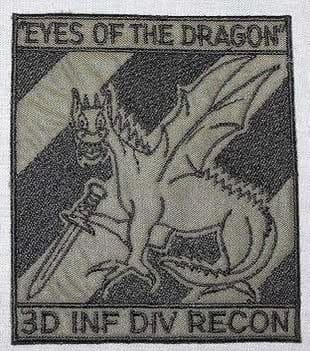
The U.S. Army’s decision to stand up a 3rd Recon Company inside the 3rd Marine Division is more than a force-structure tweak; it is a deliberate return to the Cold-War model of small, self-contained teams trained to operate hundreds of kilometers behind enemy lines with nothing but what they can carry. Those LRRP companies of the 1960s and ’70s proved that a handful of highly skilled riflemen, equipped with little more than bolt-action precision rifles, suppressed pistols, and the occasional suppressed sub-gun, could generate intelligence that entire brigades could not. Today’s iteration simply swaps the M40 for modern semi-auto precision rifles and adds encrypted burst-transmission radios, yet the core truth remains unchanged: the individual marksman’s ability to move, shoot, and communicate is still the decisive factor. For the 2A community that lesson is immediate and practical—every incremental restriction on magazine capacity, barrel length, or suppressor ownership is a direct tax on the same skill set the Army is betting its future reconnaissance doctrine on.
What makes the story especially relevant is the quiet acknowledgment that peer-level conflict will again demand dispersed, lightly equipped teams rather than ponderous combined-arms formations. If the service is willing to invest millions in training and equipping these recon Marines, it implicitly concedes that the private citizen’s parallel capability—accurate rifles, reliable optics, and legal suppressors—remains a strategic national asset rather than a liability. The same technologies that allow a 3rd Recon team to stay off-grid for weeks are the very tools law-abiding Americans use for predator control, precision varminting, and home-defense carbines. When regulators treat those tools as suspect, they are effectively disarming the very demographic the military hopes to recruit from and, in extremis, rely upon for an irregular defense network.
The deeper implication is cultural. By resurrecting LRRP-style units, the Army is validating the historical American preference for the skilled individual over the massed formation. That preference is encoded in the Second Amendment precisely because the Founders understood that a population comfortable with arms is the ultimate strategic reserve. Every time a state legislature adds another hurdle to owning the modern equivalents of the M1 Carbine or the Winchester Model 70, it chips away at the very human capital the Pentagon is now trying to reconstitute. The 3rd Recon Company is therefore not just an interesting footnote in a niche newsletter; it is a live demonstration that the skills, mindset, and equipment protected by the Second Amendment are once again considered indispensable to American security.


