

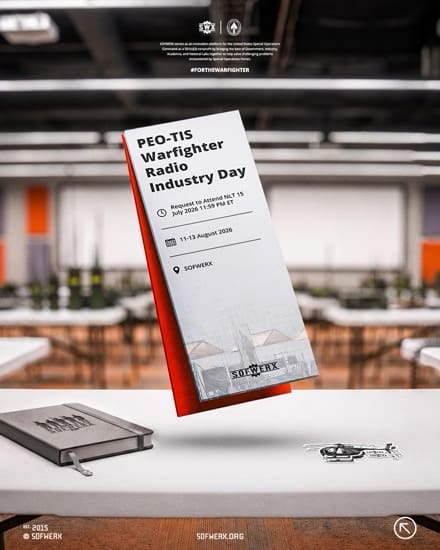
SOFWERX’s upcoming Warfighter Radio Industry Day isn’t just another government procurement event—it’s a signal that the tactical communications gap between elite special-operations units and the average armed citizen is narrowing faster than most realize. When USSOCOM openly admits it needs radios that survive denied, degraded, and low-latency environments, it’s essentially crowdsourcing the same rugged, encrypted mesh-networking tech that private citizens increasingly want for everything from rural property defense to disaster-response networks. The Key Leader Radio, Intra-Team Radio, and Team Networking Device specs being floated will almost certainly trickle down into civilian LMR and Part 90/95 gear within a few years, giving 2A advocates another data point that “military-grade” capability is no longer the exclusive province of federal budgets.
That convergence matters because the same spectrum-agile waveforms, frequency-hopping, and self-healing mesh architectures that keep operators talking when satellites are jammed will also let lawfully armed Americans maintain comms when cell towers go dark or local authorities attempt information blackouts. The fact that SOFWERX is staging an open industry day rather than a closed-door classified briefing suggests the government recognizes it can’t out-innovate the commercial sector on its own—an implicit admission that civilian R&D pipelines are now indispensable to national defense. For the 2A community, this is both validation and opportunity: every incremental improvement in size, weight, power, and encryption demanded by SOCOM operators is another step toward affordable, license-free or lightly licensed radios that don’t require a federal badge to own or operate.
Critics who claim modern tactical radios are “too advanced” for civilians will have a harder time making that argument once the very features USSOCOM is soliciting—low-probability-of-intercept waveforms, rapid network reformation, and multi-band interoperability—start appearing in commercial off-the-shelf units. The 2A movement has long argued that the right to keep and bear arms includes the tools necessary to make that right effective; reliable, secure team communications are rapidly becoming one of those tools. Industry Day at SOFWERX is therefore more than a shopping list for Green Berets—it’s an early glimpse of the next wave of constitutionally protected technology that law-abiding Americans will soon be able to buy, train with, and rely on when seconds count.


