

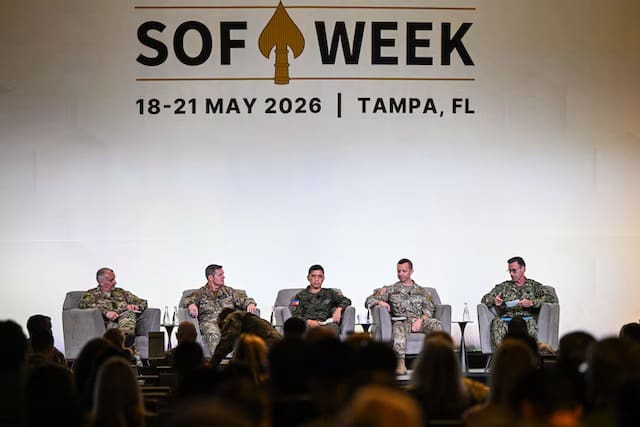
In the high-stakes world of modern special operations, trust isn’t just a buzzword—it’s the ultimate force multiplier. Senior leaders from U.S. Special Operations Command, Sweden, and the Philippines recently drove this point home during a panel at Special Operations Forces Week 2026, stressing that deep international partnerships are essential for maintaining readiness and achieving true interoperability. These aren’t ceremonial handshakes; they’re the foundational relationships that allow elite units to seamlessly integrate everything from intelligence sharing to cutting-edge attritable autonomous weapons systems on the battlefield. For an American audience that values self-reliance and tactical superiority, this serves as a reminder that even the most capable forces recognize the strategic necessity of reliable allies when facing peer adversaries like China in the Indo-Pacific or hybrid threats in Europe.
What makes this discussion particularly relevant to the Second Amendment community is the underlying philosophy of preparedness and capability. Just as responsible gun owners build networks of trusted training partners, range buddies, and knowledgeable instructors to sharpen their own skills, SOF leaders are doubling down on human relationships to make technology truly effective. Attritable autonomous systems—cheap, expendable drones and robotic platforms that can swarm, scout, or strike without risking human lives—represent the future of warfare, but they only deliver decisive advantage when operators from different nations trust each other enough to share real-time data and execute complex missions together. This mirrors the firearms community’s growing embrace of advanced optics, suppressors, and training methodologies; the tools matter, but the human element and practiced alliances determine whether they succeed or become expensive paperweights.
The implications extend beyond the battlefield into our own constitutional framework. As governments increasingly invest in autonomous systems and international defense pacts, the private citizen’s fundamental right to keep and bear arms serves as the ultimate strategic reserve and check on power. While SOF warriors perfect their partnerships abroad, the 2A community must continue honing its own proficiency, fostering domestic alliances, and preserving the individual capability that has always been America’s true strength. In an era of rapid technological change and shifting global alliances, self-reliant Americans who maintain both their skills and their arms remain the most reliable deterrent—whether supporting professional forces or standing as the last line of defense for liberty.


