

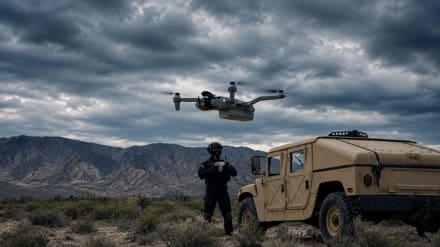
Red Cat’s Hellcat isn’t just another drone announcement—it’s a deliberate signal that the same American ingenuity driving small, lethal UAS platforms is now being packaged for export to NATO partners and beyond. Built on the battle-tested Black Widow airframe, the Hellcat keeps the compact, man-portable form factor that lets a single operator dominate the last tactical mile, yet adds the dual-use flexibility defense buyers crave. For the 2A community, this matters because every new export configuration that proves itself overseas strengthens the domestic supply chain, keeps U.S. factories humming, and normalizes the idea that small drones are legitimate tools of individual and collective defense rather than exotic military-only toys.
The timing at Eurosatory 2026 is no accident. While European governments scramble to replenish stockpiles and close the drone gap exposed by Ukraine, Red Cat is positioning an American platform as the plug-and-play answer. That creates a virtuous cycle: more foreign sales mean more R&D dollars flowing back into stateside innovation, which in turn trickles down to civilian-accessible components, sensors, and flight controllers. In an era when anti-Second Amendment voices already eye 3D-printed frames and FPV rigs with suspicion, visible commercial success of U.S.-made small UAS helps inoculate the technology against future regulatory overreach.
Ultimately, Hellcat’s debut underscores a broader truth the 2A crowd has long understood—rights and capabilities are intertwined. When American companies lead in small-drone lethality and reliability, they reinforce the cultural and industrial case that private citizens should retain access to the same class of tools the government trusts with national defense. The more these systems proliferate under the Stars and Stripes, the harder it becomes for anyone to argue that an armed populace with eyes in the sky somehow threatens public safety.


