

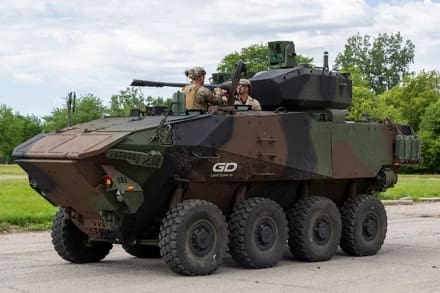
Recon Marines are doing more than just testing a new vehicle—they’re shaping the very DNA of the Amphibious Reconnaissance Vehicle (ARV) before it ever rolls off the line. By embedding operators who will actually swim it ashore under fire, the Corps is ensuring that every hatch, sensor suite, and weapons station reflects the brutal calculus of a peer fight in the littorals. That feedback loop is the difference between a platform that merely survives PowerPoint briefings and one that survives an enemy anti-ship missile barrage at 3 a.m. in the South China Sea.
For the broader Second Amendment community, this story is a reminder that rights without readiness are just rhetoric. The same constitutional logic that protects an individual’s rifle also underpins why a free society fields purpose-built weapons systems: deterrence only works when the gear is lethal, survivable, and trusted by the people who carry it. When Recon Marines insist on better optics, redundant comms, or modular weapon mounts, they’re exercising the same principle that lets civilians tailor an AR-15 to their needs—form must follow function, or the Second Amendment becomes a parchment barrier instead of a living deterrent.
The long-term implication is strategic as well as tactical. Vehicles co-designed with end users tend to stay in service longer, require fewer expensive refits, and—crucially—actually get fielded instead of languishing in depots because nobody wanted them. That efficiency matters when defense budgets are finite and near-peer competitors are fielding drones and hypersonics at industrial speed. In short, letting the trigger-pullers steer procurement isn’t just good engineering; it’s how a constitutional republic keeps both its military edge and its founding compact intact.


