

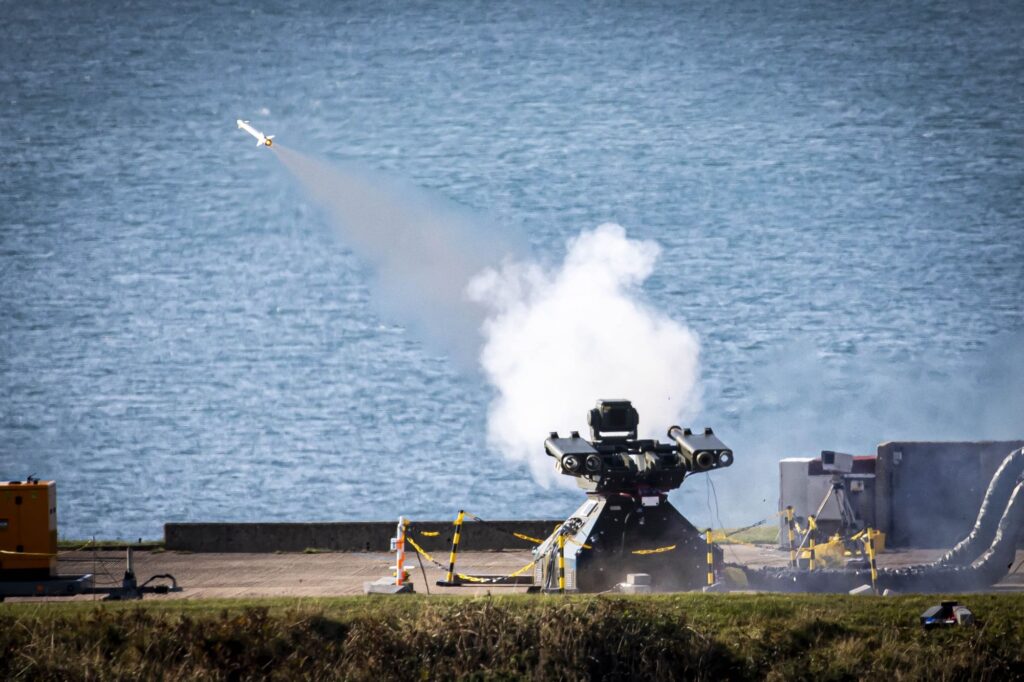
In an era where cheap commercial drones are rewriting the rules of warfare—from Ukrainian battlefields to Middle Eastern skirmishes—the RAF Regiment is stepping up with a sophisticated Counter-UAS (Unmanned Aerial Systems) strategy that’s as much about brains as brawn. These pint-sized threats, often cobbled together from off-the-shelf parts, aren’t just buzzing annoyances; they’re surveillance eyes, precision-guided munitions, and force multipliers for adversaries ranging from jihadists to peer-state militaries. The Regiment’s approach flips the script: neutralizing the immediate danger while harvesting real-time intelligence from captured signals, flight paths, and payloads. It’s a masterclass in turning a $500 hobby drone into a goldmine of enemy intel, ensuring RAF airbases remain impenetrable fortresses in contested skies.
This isn’t just a British air force flex—it’s a wake-up call with direct ripples for the U.S. 2A community, where armed self-defense meets an exploding drone threat landscape. Picture hobbyist quadcopters repurposed for cartel scouting along the border or urban riots turned into no-fly zones by anarchist swarms. The RAF’s playbook underscores a hard truth: passive defenses like jammers or nets are yesterday’s news; proactive, layered systems—think kinetic interceptors paired with AI-driven spectrum analysis—are the future. For gun owners, this validates the enduring value of shoulder-fired systems like the military’s Stinger analogs or emerging civilian countermeasures (hello, drone-piercing 12-gauge loads and laser dazzlers). It’s pro-2A rocket fuel: when feds drag their feet on regulating dual-use drone tech, individual marksmanship and ingenuity become the first line of homeland defense, echoing the militiaman’s role in asymmetric threats.
The implications run deeper still. As drones democratize aerial lethality—much like AR-15s democratized infantry firepower—expect regulatory pushback mirroring past gun grabs. Yet the RAF’s success proves adaptation wins: train on the tools at hand, from red-dot optics for visual ID to networked apps for swarm tracking. 2A patriots should curate their own Counter-UAS kits now, blending tradecraft with tech, because the airspace above your homestead isn’t guaranteed neutral. This story isn’t about distant RAF runways; it’s a blueprint for armed citizens fortifying the final redoubt against the skyborne unknown.


