

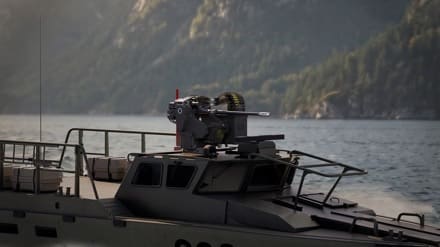
Northrop Grumman’s latest push into drone-defeating guns and ammunition is a reminder that the same technologies that protect troops abroad are already shaping the civilian market at home. The company’s emphasis on “maximizing battlefield flexibility” translates, in practical terms, to lighter, more modular weapon systems that can switch between kinetic, programmable-airburst, and directed-energy modes without swapping platforms—an approach that mirrors the modularity 2A enthusiasts prize in AR-15 variants and quick-change barrel kits. When defense primes talk about “innovative guns and ammunition,” they are essentially validating the same design principles that hobbyists and home-defense users have championed for years: reliability under stress, rapid reconfiguration, and the ability to engage fleeting or unconventional targets.
For the 2A community, the takeaway is twofold. First, the proliferation of small drones has made the argument for magazine-fed, semi-automatic firearms with modern optics and fast-handling ergonomics more compelling than ever; a drone that can drop a grenade or relay targeting data does not politely present itself at 50 yards—it zips past at rooftop height. Second, the same supply chains and manufacturing tolerances that Northrop Grumman relies on to produce programmable 30 mm or 40 mm rounds are the ones that keep civilian ammunition affordable and plentiful. Any policy that hampers domestic production of advanced primers, powders, or precision projectiles under the guise of “military-grade” restrictions will inevitably raise costs and reduce availability for sport shooters and self-defense practitioners alike.
Ultimately, the drone threat crystallizes why the right to keep and bear arms must remain tethered to technological progress rather than frozen in 1791 or 1865. As state actors and cartels alike weaponize commercial UAVs, an armed citizenry equipped with accurate, modular firearms and modern ammunition is not an anachronism—it is a distributed sensor-and-response network that complements federal systems. Northrop Grumman’s innovations underscore a simple truth: the tools that defeat drones on the battlefield work because they are versatile, legal, and in the hands of trained users. The same logic applies at home.


