

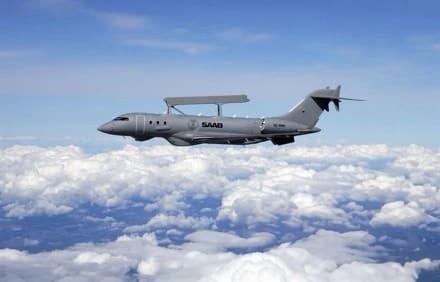
NATO’s decision to open formal talks with Saab for up to ten GlobalEye AEW&C aircraft is more than a routine procurement update; it signals that the Alliance is betting on a single, high-end Swedish platform to replace its aging E-3 Sentry fleet and close critical gaps in long-range surveillance. GlobalEye’s combination of Erieye ER radar, advanced electronic intelligence, and multi-domain data fusion gives commanders the ability to track everything from low-flying cruise missiles to stealthy aircraft at ranges that legacy systems simply cannot match. For the 2A community, the move is a reminder that even in an era of hypersonic threats and drone swarms, the same principles that underpin individual self-defense—early detection, layered response, and technological superiority—scale directly to national and alliance-level security.
The timing is telling. With Russia’s invasion of Ukraine exposing the fragility of European air-defense networks and China’s rapid modernization of its own AEW&C force, NATO is racing to restore credible deterrence before the next crisis. Saab’s selection also underscores a broader trend: European nations are increasingly willing to source critical defense capabilities from non-U.S. suppliers when performance and sovereignty align. That diversification matters to gun owners who understand that a healthy domestic firearms industry and a robust transatlantic defense-industrial base are two sides of the same coin—both depend on innovation, competition, and the political will to invest in freedom’s tools rather than rhetoric alone.
Ultimately, the GlobalEye deal is a quiet but powerful affirmation that surveillance and situational awareness remain the first line of any credible defense posture. Just as an armed citizen relies on situational awareness to exercise the right to keep and bear arms responsibly, NATO is acknowledging that without eyes in the sky, even the most advanced fighters and ground forces operate at a disadvantage. The 2A community should watch this program closely; the same technologies that protect alliance airspace today will shape the next generation of sensors, data links, and decision-support systems that keep free societies ahead of those who would disarm them.


