

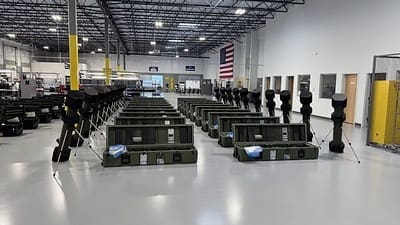
The U.S. Army’s latest $50-plus-million order for HERO 120 loitering munitions is more than a procurement line item—it’s a live-fire demonstration that the same technologies once reserved for special-operations raids are now being pushed down to regular line units for training and readiness. By pairing Mistral’s U.S.-based integration muscle with Uvision’s combat-proven Israeli airframe, the Pentagon is signaling that expendable, man-in-the-loop precision strike is moving from “nice-to-have” to standard rifle-squad gear. For Second Amendment advocates, the message is unmistakable: if the military trusts individual soldiers with one-way attack drones that can loiter, identify, and engage targets on their own authority, the notion that law-abiding citizens cannot be trusted with similar defensive tools collapses under its own logic.
Equally telling is the explicit emphasis on “Soldier training and mission success.” Every additional HERO 120 delivered to a stateside range is another data point proving that small, autonomous systems are becoming as routine as M4s and Javelins. That normalization matters. When the same miniaturized sensors, encrypted data links, and warhead miniaturization trickle into the civilian market—already visible in the growing array of American-made FPV and long-range reconnaissance drones—the 2A community gains practical tools for rural property protection, search-and-rescue on private land, and state-level emergency response where official assets may be hours away. Far from eroding security, these systems extend the same principle that underpins the Second Amendment itself: an armed populace that can see farther, react faster, and act more precisely is a populace harder to intimidate.
Finally, the timing—announced just as near-peer competitors field their own attritable munitions—underscores that America’s edge will come from an ecosystem in which commercial innovation and citizen ingenuity are not walled off from national defense. The more the services rely on domestic suppliers and a trained civilian talent pool of drone pilots, roboticists, and precision-machining shops, the stronger the argument that restrictive legislation aimed at the same technologies in private hands is both counterproductive and constitutionally infirm. In short, the Army’s decision to buy more HERO 120s isn’t just about one program; it’s an inadvertent endorsement of the decentralized, small-unit lethality that the 2A community has championed all along.


