

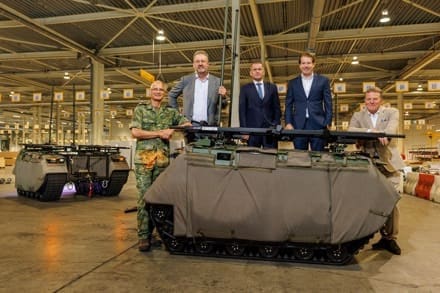
The delivery of the first Dutch-built THeMIS unmanned ground vehicles to Ukraine marks a quiet but decisive shift in how modern battlefields are being reshaped by autonomous systems. Milrem’s tracked logistics and combat-support platform, now rolling off a production line in Born, is designed to haul ammunition, evacuate casualties, and mount remote weapon stations without exposing soldiers to direct fire. For the 2A community this is more than another headline about foreign aid; it is proof that the same technologies—rugged mobility, modular payloads, and man-in-the-loop fire control—are migrating from hobbyist drones and civilian robotics straight into state arsenals at scale.
What makes the story especially relevant to American gun owners is the speed at which export-controlled autonomy is being normalized. The Netherlands is underwriting more than one hundred vehicles explicitly for combat use, yet the core architecture (electric drive, open architecture mission modules, NATO-standard interfaces) is commercially available. That means the same engineering lessons now being stress-tested in Ukraine will inevitably appear in civilian robotics markets, whether for ranch security, competition shooting ranges, or disaster-response teams. The 2A community has long argued that law-abiding citizens should not be locked out of emerging technologies simply because governments discover new uses for them; the THeMIS rollout is a live demonstration of why that principle matters.
Finally, the story underscores a broader strategic point: nations that treat small arms and robotic systems as two sides of the same citizen-preparedness coin will hold the advantage when supply chains tighten or conflicts spill over borders. While legacy media frames these vehicles solely as “aid to Ukraine,” the underlying message for American readers is that distributed, privately accessible robotics strengthen deterrence at every level—from individual homesteads to national defense. The faster the technology diffuses into lawful hands, the less any single government can monopolize the future of armed autonomy.


