

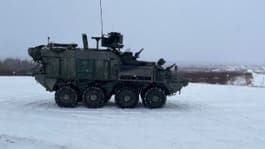
Kongsberg’s NOK 1.1 billion win with General Dynamics Land Systems–Canada is more than a procurement footnote; it’s a reminder that remote weapon stations are becoming the default “eyes and trigger” for modern armored fleets. The Protector RS4’s open-architecture design lets crews stay buttoned-up while the system slews, ranges, and engages with everything from 7.62 mm coax to 30 mm cannons—an approach that trades exposed gunners for networked sensors and faster target hand-off. For the Canadian ACSV program, that means fewer soldiers silhouetted against a hatch and more data flowing to the vehicle’s battle-management suite, a capability that has already proven itself on everything from Strykers to Australia’s Boxer fleet.
For the broader small-arms community, the story underscores how precision fire-control technology is migrating from crew-served platforms into the civilian space. The same stabilization algorithms and ballistic computers that let a remote .50 cal track a drone at 1,200 meters are now appearing in commercial smart scopes and digital aiming modules. While the hardware itself remains heavily regulated, the underlying software lessons—sub-milliradian tracking, environmental compensation, and user-defined engagement envelopes—are shaping the next generation of civilian precision-rifle accessories. In short, every time a Western army fields a Protector-class station, it quietly subsidizes R&D that trickles down to the very optics and triggers law-abiding citizens rely on for sport and self-defense.
The contract also highlights a strategic reality: remote systems are force multipliers that let smaller crews project more accurate, sustained firepower. That same logic applies at the individual level—lighter, smarter aiming solutions let one shooter do what once required a spotter and a heavy weapon. As export programs like Canada’s ACSV proliferate, expect continued refinement of recoil management, power budgeting, and sensor fusion, all of which ultimately benefit the aftermarket ecosystem that keeps civilian firearms relevant in an era of tightening budgets and evolving threats.


