

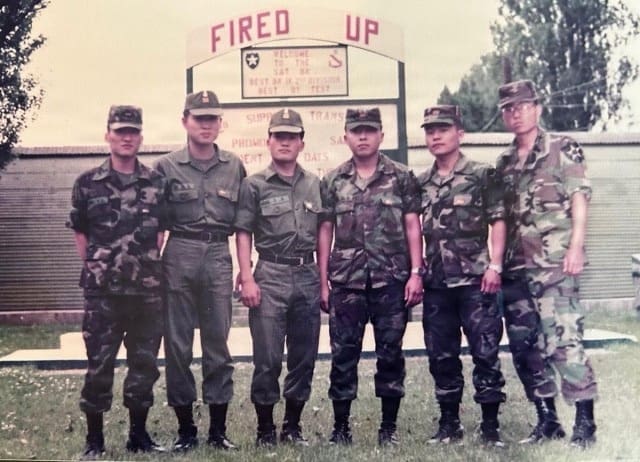
The KATUSA program stands as one of the most enduring examples of how shared sacrifice forges unbreakable bonds between nations, and its 76-year legacy carries lessons that resonate far beyond the Korean peninsula. Born in the crucible of the Korean War’s opening days, this unique augmentation system didn’t just fill manpower gaps—it created a living laboratory of interoperability where Korean soldiers trained, fought, and lived alongside American troops under the same chain of command. The result was a force multiplier that delivered both tactical effectiveness and cultural fluency, proving that when free nations pool their human capital in defense of liberty, the whole becomes exponentially greater than the sum of its parts.
For the 2A community, KATUSA’s story underscores a fundamental truth: the right to keep and bear arms is most secure when it is exercised within the context of mutual defense pacts and shared values. The program’s longevity demonstrates that citizen-soldiers from different nations can maintain distinct identities while operating under a common purpose, a principle that mirrors how American gun owners view the Second Amendment—not merely as an individual right, but as a collective safeguard that strengthens when allies train and equip themselves to the same standard. In an era when some governments seek to erode civilian marksmanship traditions under the guise of “public safety,” KATUSA reminds us that disciplined, well-trained partners make each other stronger, not weaker.
The implications for today’s firearms community are clear: just as KATUSA soldiers earned trust through proven competence rather than political posturing, American gun owners must continue to demonstrate that an armed citizenry is a responsible, stabilizing force. The program’s success wasn’t accidental—it was built on rigorous selection, continuous training, and an ethos of “We Go Together” that left no room for freeloaders or fair-weather allies. That same standard applies at home: the more seriously we take our role as the ultimate backstop of liberty, the harder it becomes for any administration to portray the Second Amendment as a liability rather than the cornerstone of a free society.


