

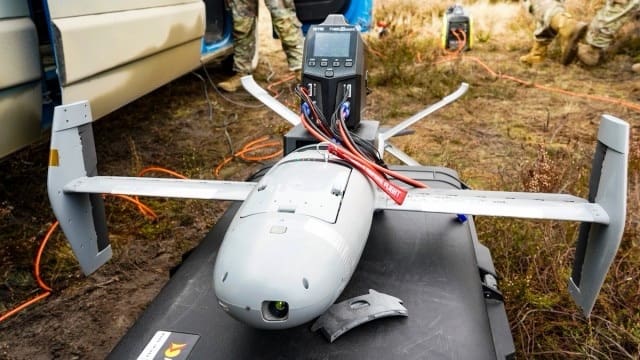
In a significant move that underscores the accelerating global arms race against unmanned aerial threats, the U.S. Army Secretary alongside defense leaders from Australia, Poland, and the Republic of Korea have inked agreements granting these allies direct access to the Joint Interagency Task Force 401 drone defense marketplace. This isn’t just bureaucratic paperwork; it represents a maturing international framework for rapidly fielding counter-UAS systems without the typical red tape that slows down procurement. JIATF-401 essentially functions as a one-stop shop where vetted partners can acquire proven American counter-drone technologies, ranging from kinetic interceptors and directed energy weapons to advanced detection and jamming platforms. For nations on the front lines of hybrid warfare, from the Korean DMZ to NATO’s eastern flank, this streamlined access could prove decisive in neutralizing the cheap drone swarms that have redefined modern conflict from Ukraine to the Middle East.
What makes this development particularly relevant to the Second Amendment community is the underlying truth it reinforces about technology, self-reliance, and the democratization of defensive capabilities. While the 2A community has long championed the individual right to effective tools for personal and community defense, the same principles scale upward to nations. Just as responsible citizens seek reliable means to counter emerging threats like criminal drone surveillance or worse, allied governments are now better positioned to protect their sovereignty against state and non-state actors who increasingly rely on commercially available UAVs. The proliferation of counter-drone systems through trusted partnerships prevents adversaries from gaining technological monopolies while encouraging innovation in both military and, eventually, civilian sectors. We’ve already seen civilian interest in counter-UAS technology grow in the United States, particularly among critical infrastructure owners, rural landowners, and those concerned about privacy invasion from above.
The broader implication here is that drone defense is becoming as fundamental to security policy as small arms have been for centuries. As commercial quadcopters evolve into weapons platforms capable of delivering explosives or conducting reconnaissance for larger attacks, the ability to detect, disrupt, and destroy them moves from niche military capability to essential defensive posture. For American gun owners and constitutionalists, this international expansion of JIATF-401 serves as a reminder that the fundamental human right to self-defense doesn’t stop at the national border or the treeline. It evolves with technology. The more we normalize rapid, responsible proliferation of counter-drone solutions among allies, the more pressure builds for sensible policy at home that respects the innovation cycle rather than trying to regulate it into oblivion. In an era of asymmetric threats, maintaining technological edges, and the freedom to acquire defensive systems, remains as vital to liberty as it was when the Founders first enshrined the right to keep and bear arms.


