

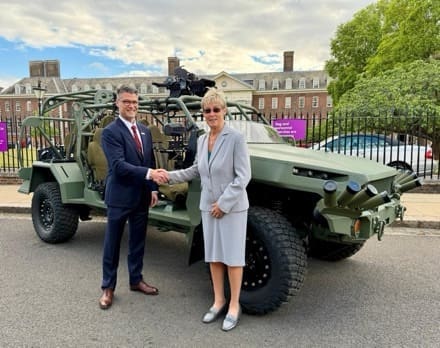
GM Defence’s decision to lock in ISTEC as its go-to mission-kit partner for UK and broader NATO programs is more than a routine supply-chain announcement—it’s a signal that Western militaries are doubling down on modular, upgradeable weapon systems that keep small arms relevant on tomorrow-side battlefields. By handing ISTEC exclusive rights inside the UK and preferred status across Europe, GM Defence is betting that British engineering can deliver the kind of plug-and-play optics, suppressors, and fire-control accessories that let legacy platforms punch above their weight without forcing armies to buy entirely new rifles every decade. For the 2A community watching from across the Atlantic, the move underscores a larger truth: when governments treat small arms as long-term investments rather than disposable commodities, the aftermarket for high-quality components flourishes, driving innovation that eventually trickles down to civilian shooters in the form of better ergonomics, lighter materials, and more reliable suppressors.
The timing matters. NATO’s renewed focus on peer conflict has exposed how quickly optics, night-vision mounts, and integrated suppressors can become the decisive edge; ISTEC’s selection suggests GM Defence wants to embed those capabilities at the factory level rather than rely on piecemeal soldier-level purchases. That approach mirrors what American enthusiasts have long argued—that the Second Amendment ecosystem thrives when manufacturers and end-users share a common parts and accessory pipeline. If ISTEC’s kits prove rugged enough for UK special-operations units, expect the same mounting standards and suppressor tech to appear on U.S. civilian-legal platforms within a few product cycles, giving American gun owners access to hardware refined under real-world military contracts.
Ultimately, the appointment reinforces a pro-2A talking point that rarely makes headlines: export success and domestic liberty are linked. Every time a NATO partner standardizes on a British or American accessory maker, it validates the industrial base that also serves private citizens. Far from being a niche defense story, this partnership is another data point showing that strong small-arms industries—supported by both government contracts and civilian demand—keep freedom’s toolbox sharp on both sides of the Atlantic.


