

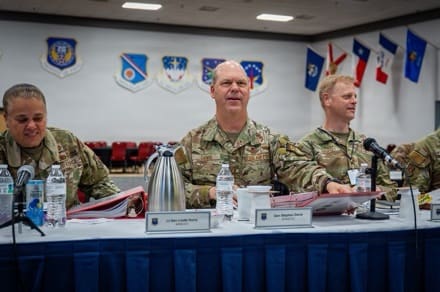
Barksdale’s three-day summit wasn’t just another PowerPoint parade; it was a deliberate signal that the nuclear triad’s future is being stress-tested against peer adversaries who are fielding hypersonic glide vehicles and road-mobile ICBMs at a pace that makes the old “replace in the 2030s” timeline look leisurely. By pulling acquisition, sustainment, and operational leaders into the same room, Global Strike is trying to compress the kill-chain between a validated requirement and a fielded weapon—an approach the firearms community has watched play out in microcosm every time the civilian market leaps ahead of sluggish federal procurement. When the Air Force finally fields the next-generation Long-Range Standoff missile or the B-21’s penetrating stand-off munitions, the same industrial base that stamps out AR-15 bolts and suppressors will be asked to scale precision guidance sections and low-observable coatings; any hiccup there ripples straight into the cost and availability of the very components 2A advocates rely on for lawful self-defense.
The deeper implication is philosophical as much as technical. A credible nuclear deterrent underwrites the entire lattice of conventional power that keeps the seas open and the sky permissive—conditions that, historically, have been prerequisites for an armed citizenry to remain armed. Every extra month spent wrangling requirements documents is another month an adversary can spend hardening its own air defenses or proliferating proliferation-resistant warhead designs. For Second Amendment supporters who sometimes view “strategic” programs as distant from everyday carry, the Barksdale review is a reminder that the same constitutional fabric protecting an individual’s right to keep and bear arms also obligates the state to maintain a military second to none; erode one and the other frays.


