

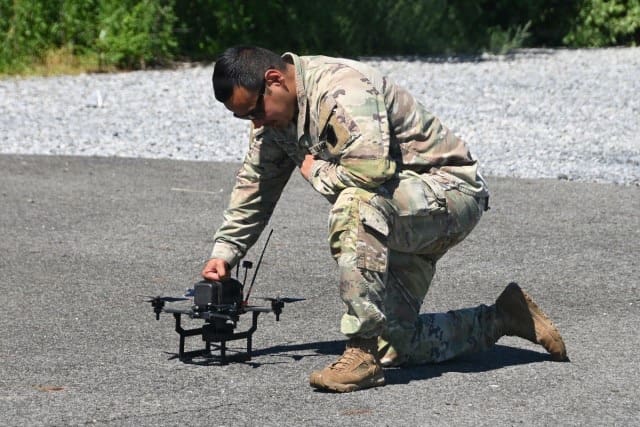
Fort Indiantown Gap’s decision to reconfigure ranges for UAS and counter-UAS training is more than a tactical upgrade; it’s a recognition that the next fight will be decided as much by who controls the airspace above the infantryman as by the rifles in his hands. By carving out dedicated lanes for small drones and the systems that defeat them, the Army is acknowledging that every rifleman may soon need to understand both the threat overhead and the tools—kinetic, electronic, or directed-energy—that can neutralize it. For the 2A community, the lesson is clear: the same constitutional logic that protects the right to keep and bear arms also protects the right to keep and bear the sensors, jammers, and even small unmanned aircraft that free citizens may one day need to defend hearth and homeland when government assets are stretched thin or politically unavailable.
The shift also underscores a deeper truth about rights and technology: every new domain of warfare eventually migrates into civilian hands. Just as the AR-15 evolved from a military platform into the most popular rifle in America, small UAS and counter-UAS gear are already appearing on the commercial market. Training servicemembers to operate and defeat drones at Indiantown Gap will inevitably accelerate the transfer of knowledge—through veterans, contractors, and open-source discussion—into the broader private sector. That diffusion strengthens the 2A ecosystem by ensuring that law-abiding citizens are not permanently outclassed by either criminal cartels or an overreaching state that might one day deploy similar systems against them.
Finally, the story is a quiet rebuke to the notion that the Second Amendment is frozen in 1791 technology. The Founders protected the individual’s right to the “arms” of the era because those arms were decisive on the battlefield; today, decisive arms include the ability to see, jam, or interdict unmanned systems. By expanding realistic training at a National Guard installation, the Army is inadvertently validating the argument that an armed populace must remain conversant with every evolving tool of warfare if it is to remain a credible check on tyranny. In short, Fort Indiantown Gap is not just preparing soldiers for the next war—it is, by extension, reminding Americans why the right to keep and bear the full spectrum of modern arms remains essential to liberty.


