

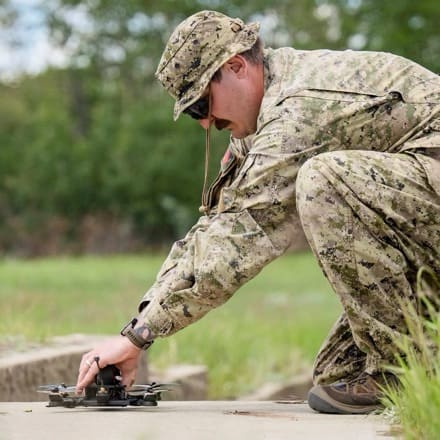
Canada’s new Defence Drone Initiative is a textbook example of how governments can rapidly scale autonomous systems when they treat them as strategic assets rather than regulatory headaches. By pairing the Department of National Defence with a dedicated Defence Investment Agency, Ottawa is cutting the usual procurement red tape that has historically kept small Canadian innovators from scaling. The result is a fast-track pipeline from prototype to fielded capability for both the Canadian Armed Forces and the Coast Guard—an approach that stands in stark contrast to the United States, where similar dual-use drone technologies are often hamstrung by ITAR restrictions and a patchwork of state-level UAV rules. For the 2A community, the lesson is clear: when a nation decides that uncrewed systems are vital to sovereignty, it finds ways to accelerate rather than impede their development.
The timing is equally instructive. With Arctic sovereignty tensions rising and hybrid maritime threats evolving, Canada is openly acknowledging that crewed platforms alone cannot provide persistent surveillance or rapid response across its vast territory. By focusing on attritable, autonomous systems that can be produced at scale, Ottawa is embracing the same “loyal wingman” and persistent ISR concepts that U.S. Special Operations and defense primes are already exploring. This matters to American gun owners and Second Amendment advocates because the underlying technologies—autonomous navigation, AI-driven target discrimination, and modular payloads—are identical to those that will eventually migrate into the civilian and recreational UAS market. A policy environment that nurtures rather than restricts these systems accelerates the virtuous cycle of cost reduction and capability growth that has already transformed the AR-15 platform and its accessories.
Finally, the initiative underscores a broader cultural shift: Ottawa is treating drones as an extension of national power rather than a regulatory nuisance to be contained. That mindset is worth watching south of the border. If Canadian firms can iterate quickly under a defense umbrella, they will generate affordable, high-performance airframes and software that American hobbyists, farmers, and responsible armed citizens can adopt for lawful purposes. Conversely, if U.S. regulators continue to layer new restrictions on the same class of technology, the innovation edge could tilt northward—reminding us once again that the right to keep and bear arms is most vibrant in an ecosystem that also protects the right to keep and improve the tools that make that right effective.


