

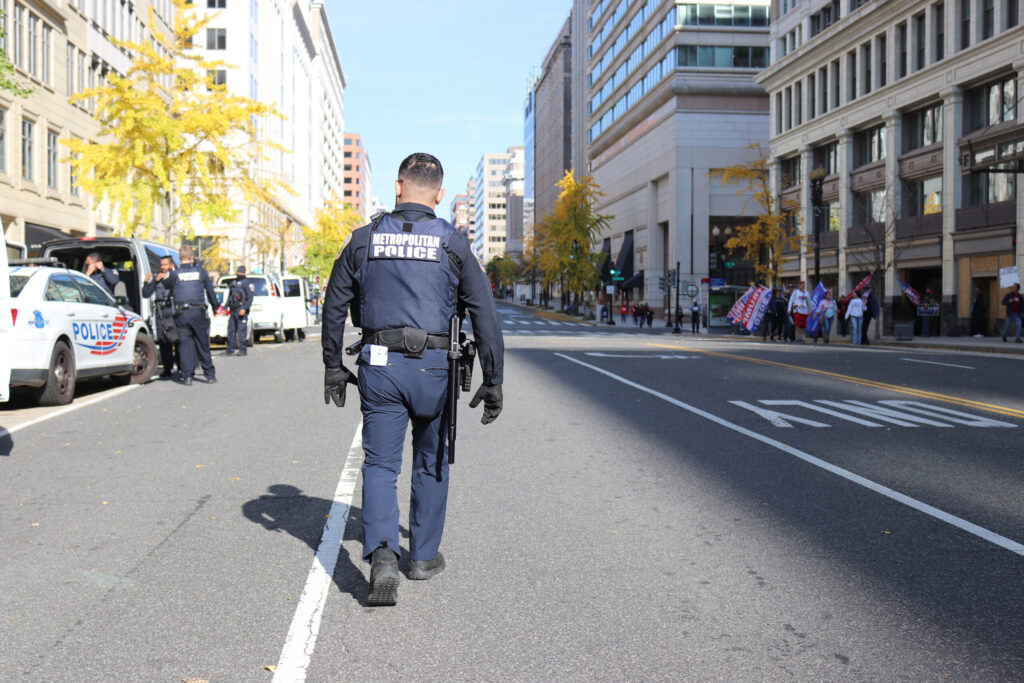
Washington, D.C.’s experiment in shrinking police budgets while crime ticks upward is the kind of real-world stress test the rest of the country can’t afford to ignore. When officers are told to do more with less—fewer patrols, slower response times, and an ever-growing list of “non-essential” calls that get deprioritized—law-abiding residents quickly learn that 911 is no longer a reliable backstop. That vacuum doesn’t stay empty for long; it gets filled by private security for those who can afford it and by heightened personal preparedness for everyone else. For the 2A community, the lesson is straightforward: the right to keep and bear arms isn’t an abstract debating point when the visible symbols of state protection are stretched thin or politically sidelined.
The capital’s experience also spotlights how restrictive carry laws and byzantine permitting schemes collide with shrinking public safety resources. Lawmakers who simultaneously champion “defund” rhetoric and maintain may-issue or no-issue concealed-carry policies are effectively telling citizens they must rely on a police force that is being deliberately downsized. That contradiction doesn’t just create legal uncertainty; it raises the practical stakes for anyone who values self-reliance. Data from other cities that have walked this path show that permit processing times lengthen, training requirements stay rigid, and the very people most exposed to rising street crime—often in neighborhoods already skeptical of police—are the last to receive permission to defend themselves.
Ultimately, D.C.’s budget-balancing exercise is a cautionary tale that gun-control advocates rarely acknowledge: when government scales back its monopoly on protection, the individual right to arms becomes the last line of defense rather than a policy footnote. The 2A community should treat these developments not as partisan talking points but as empirical evidence that preparedness, training, and legal carry options are practical necessities, not cultural accessories. In a city where federal buildings enjoy armed security details while ordinary residents navigate slower police response, the gap between theory and lived experience has rarely been wider—or more instructive.


