

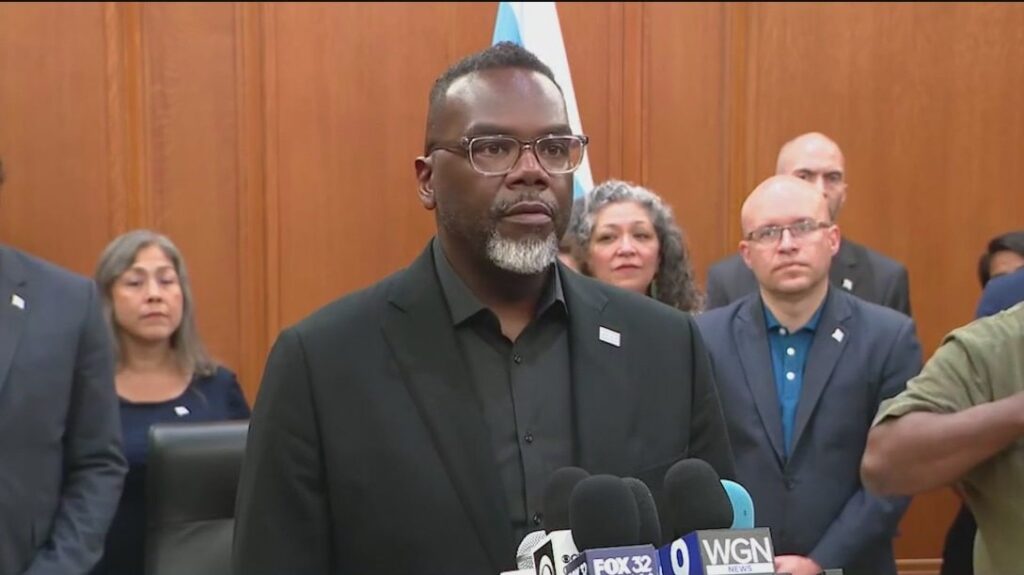
Mayor Brandon Johnson’s executive order, framed as a shield for Chicagoans against a potential National Guard presence, is less about protecting residents and more about preemptively disarming any federal effort to restore order in a city where crime statistics have long outpaced political will. By elevating local authority above federal law enforcement, the move signals to the 2A community that progressive city halls view armed citizens and federal troops as interchangeable threats rather than complementary layers of security. The practical effect is to normalize the idea that Washington, D.C., must negotiate with sanctuary-style jurisdictions before it can act, turning routine law-and-order questions into constitutional standoffs.
For gun owners, the subtext is unmistakable: if a mayor can unilaterally declare federal troops unwelcome, the same logic can be stretched to restrict lawful carry, delay permit processing, or even treat armed self-defense as a political provocation. Chicago’s track record of ignoring Supreme Court rulings on the right to keep and bear arms already demonstrates how local officials weaponize “public safety” rhetoric against the very people most exposed to violence. A federalized response, by contrast, would bypass those choke points and place trained personnel under rules of engagement that do not require city-council approval, exposing the real motive behind Johnson’s order—preserving a monopoly on force that has failed its citizens for decades.
The broader implication is a quiet escalation in the federalism wars. If mayors can label routine troop movements as “occupation,” the 2A community should expect parallel language aimed at armed citizens who refuse to outsource their security to the same governments that created the crisis. Johnson’s order is therefore not a defense of liberty but a test run for nullification politics that treats the Second Amendment as just another federal imposition to be resisted at the city line.


