

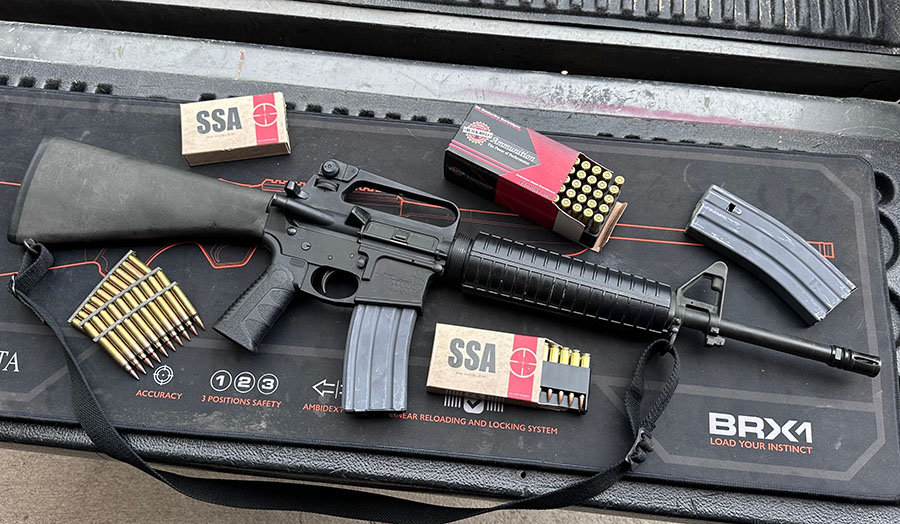
There’s something refreshingly honest about an M16 A2 build that deliberately skips the red-dot arms race and the endless accessory buffet. In an era where every new rifle seems to arrive pre-loaded with a shopping list of optics, lights, and suppressors, this project reminds shooters that the platform’s original strengths—simplicity, reliability, and that crisp A2 sight picture—still deliver when the batteries die or the electronics fail. The author’s willingness to embrace iron sights without apology isn’t nostalgia; it’s a quiet assertion that the foundational design still works, and that a rifle doesn’t need to be a gadget to be effective.
For the 2A community, this kind of build carries a deeper message about ownership and self-reliance. When enthusiasts choose to assemble rather than simply purchase, they reinforce the principle that the right to keep and bear arms includes the right to understand, maintain, and even create those arms. It pushes back against the narrative that modern firearms are too complex or regulated for civilians to handle responsibly. Instead, it celebrates the mechanical literacy that has always been part of American gun culture, from the days of the 1903 Springfield to today’s semi-auto AR platforms.
The broader implication is that just because you can remains a powerful justification in a rights-based framework. Every time a builder completes a project like this, they exercise the same individual liberty that underpins the entire Second Amendment—freedom from dependence on manufacturers, retailers, or government-approved configurations. In a landscape where some states continue to chip away at what configurations are legal, the ability to start with a stripped lower and end with a functional, accurate rifle stands as both practical skill and quiet resistance.


